
In the early years, when we were first getting started, I primarily grew annuals from seed because that was all I could afford. And while that was wonderful and they bloomed abundantly, it meant that I only had flowers to cut from during the summer months, because they all bloomed at the same time of year.
Over time, I was slowly able to expand the range of plants in my garden to include bulbs, perennials, biennials, roses, and flowering shrubs. By choosing varieties from a wide range of plant categories, I was eventually able to harvest flowers for more than 10 months of the year.
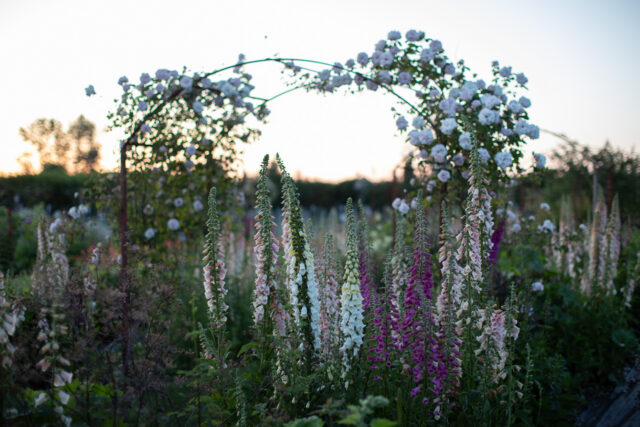
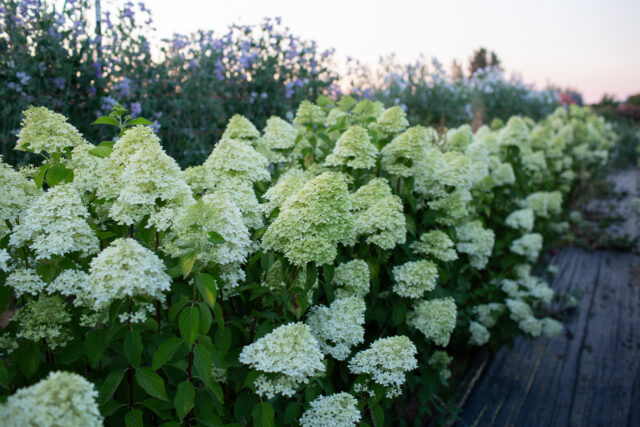 This photo-filled post explores the year in flowers here at Floret, starting with hellebores in late winter and ending with heirloom chrysanthemums in late autumn. If you’re interested in expanding the range of flowers that you’re growing or are trying to fill a gap in your bloom calendar, I hope this post gives you lots of inspiration.
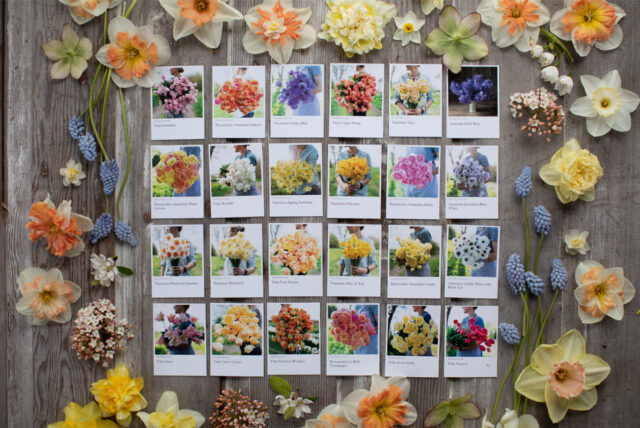
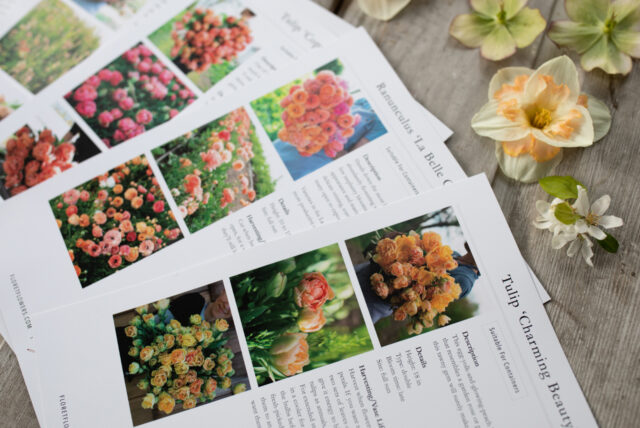 You’ll find many of these plants in the Floret Library, with photos, descriptions, and growing information. And the best part is that the entire library is printable—you can print a full group of plants as a set of planning cards or do a deeper dive into a specific variety and print its whole profile, which can be very helpful for garden planning, especially if you’re a visual learner.
To help you source all of these beautiful varieties, we’ve put together our favorite specialty seed companies, bulb and plant suppliers, and dahlia tuber resources.
February
 Hellebores
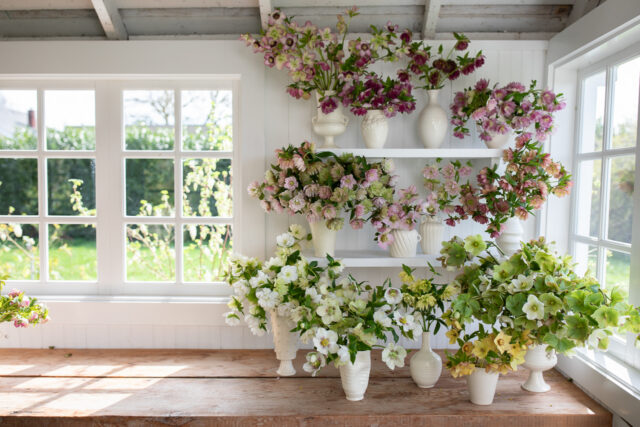
Hellebores, also known as Lenten rose, are some of the very first flowers to come into bloom each year, just as winter feels like it will never end. Plants for these long-lived perennials are on the spendier side, but I think everyone who grows them would agree that they are worth the investment in the long run. They thrive in the shade, deer generally ignore them, they come back bigger and better each year, and they are the very first flowers that can be harvested in abundance, at a time when the rest of the garden is still asleep.
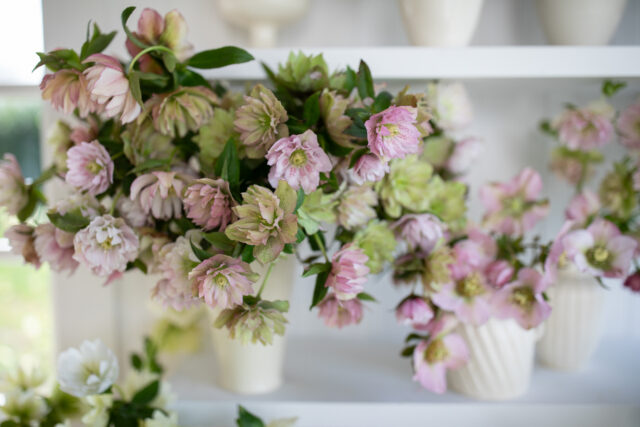
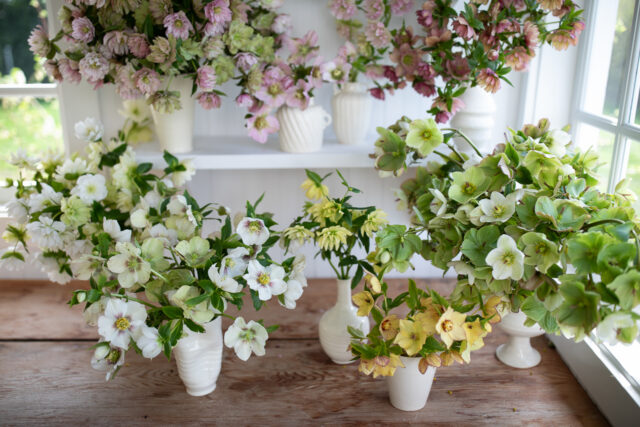 Available in a rainbow of muted colors, including eggplant, chartreuse, yellow, ivory, wine, crimson, peach, mauve, and even black—and with flowers in frilly doubles, speckled bicolors, delicately brush-marked picotees, and standard five-pointed stars—hellebores are both beautiful and incredibly diverse.
There has been a lot of great hellebore breeding over the past few years, with a focus on creating larger flowers that are upward facing, which is a big improvement over their older counterparts.
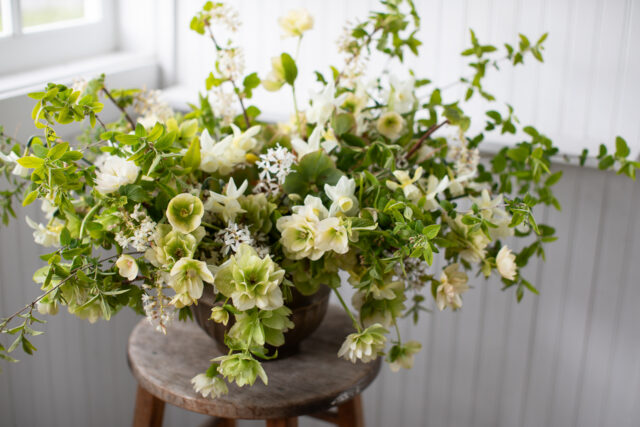
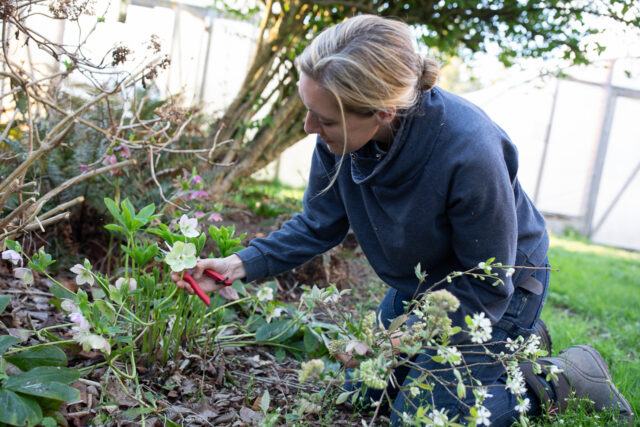 Hellebores have a reputation for not lasting well as cut flowers, but they actually make great cuts if you know when to pick them and how to condition them. It’s important to wait until flowers are on the more mature side, so hold off harvesting until all the little pollen florets encircling the center have dropped. If you can wait until the seedpods in the center start to form, they will last even longer.
If you want to see how we grow our hellebores here on the farm, learn more vase life tricks, and get a variety tour, be sure to watch this video.
March
 Iceland Poppies
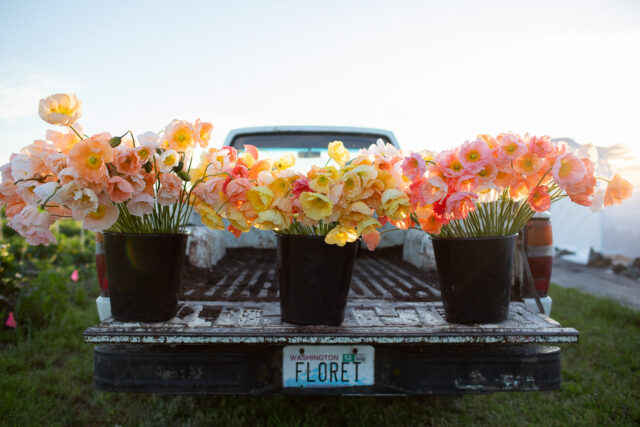
One of the most exquisite cut flowers I’ve ever grown, Iceland poppies have been a spring staple since the early years of Floret. Their tissue paper–like blooms and beautifully colored petals, paired with their fresh citrusy scent and abundant flowering habit, make them highly prized cutting garden additions. While Iceland poppies are technically perennials and can survive even the coldest winters, I’ve always grown them as hardy annuals and plant seedlings either in autumn or in late winter inside an unheated hoop house to get the earliest blooms.
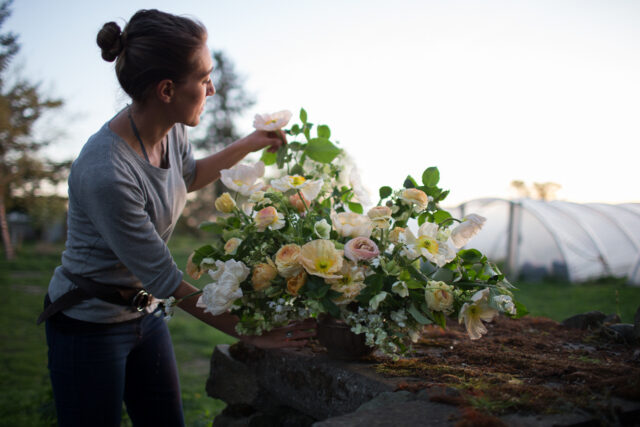
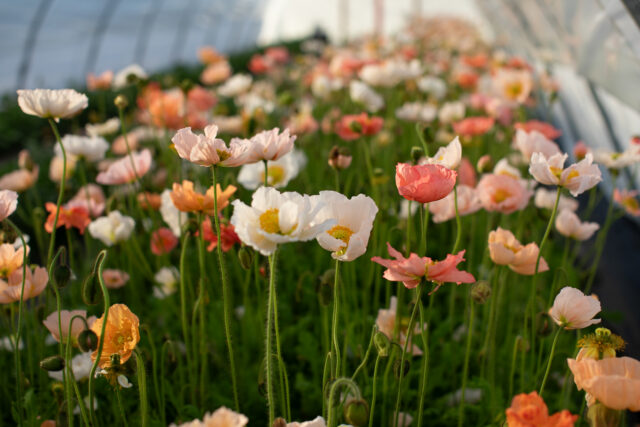 If plants are grown on the cooler side (we vent the side walls of our hoops on all but the coldest days), they will flower abundantly starting in March and continue through June. They don’t have to be grown under cover, but I’ve found that the added protection from the elements keeps blooms from becoming tattered and beaten up in harsh spring weather.
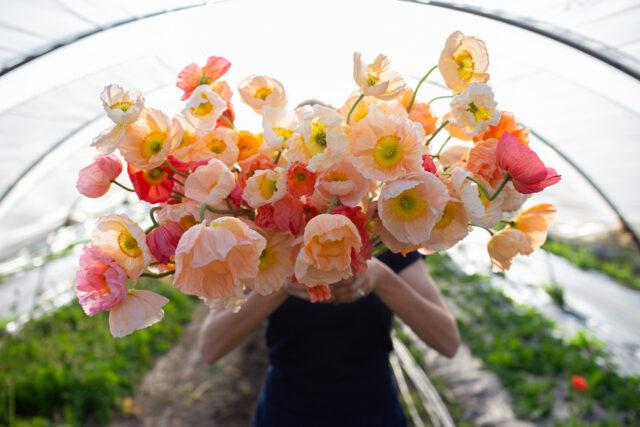
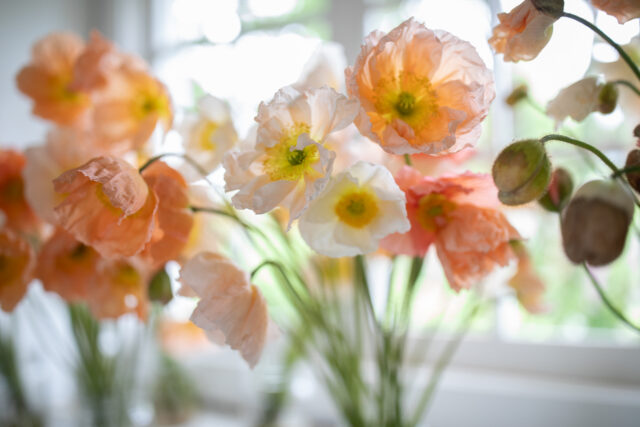 There are two main groups of Iceland poppies. The first includes the shorter, smaller-flowered varieties, like the Pastel Meadows Mix and the Champagne Bubbles series. These guys crank out a staggering number of flowers on 12- to 18-in stems.
The second group, often called Hummingbird poppies or the Colibri series, are their much larger counterparts. Their flowers are much showier and stems can get up to 2½ ft long, but they are a bit more finicky to grow because the blooms do not always open easily and sometimes need to be coaxed from their fuzzy pods.
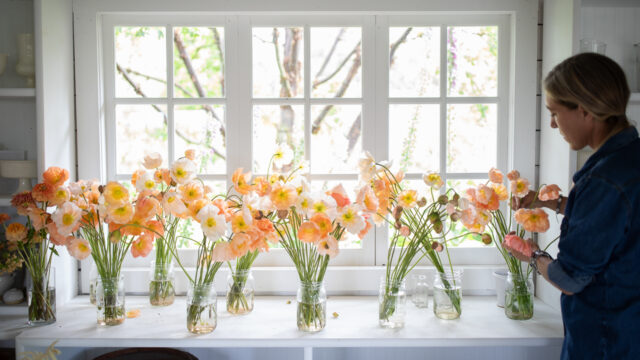
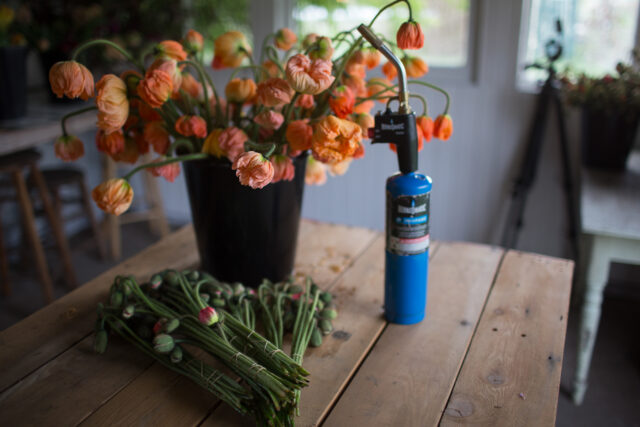 Iceland poppies last a surprisingly long time in the vase if picked at the right stage and conditioned properly. Harvest when buds are just starting to crack open; once the flowers open fully, they’re prone to damage. The trick with these ephemeral beauties is to sear the stem ends, using either a flame or boiling water, for 7 to 10 seconds. With this treatment, Iceland poppies will last for nearly a week in the vase.
If you’d like to learn more about growing poppies, read our Poppy Primer.
 Daffodils
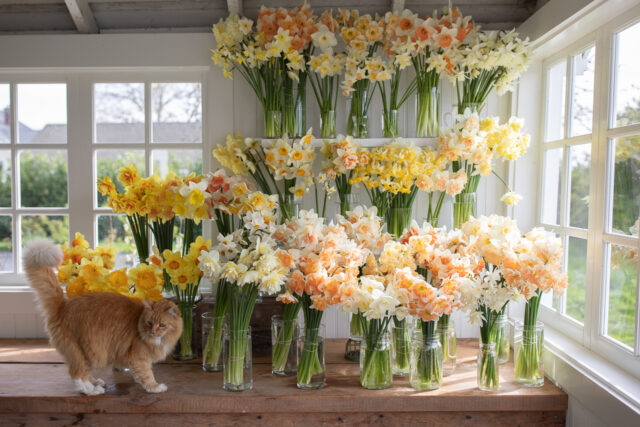
Of all the flowers we grow here on the farm, I think daffodils are probably the most loved and definitely the most appreciated. After a long winter, their cheerful, sunny faces are such a welcome sight! Over the years, I have amassed quite a collection and now grow more than 240 varieties in every shape, size, and color that they come in.
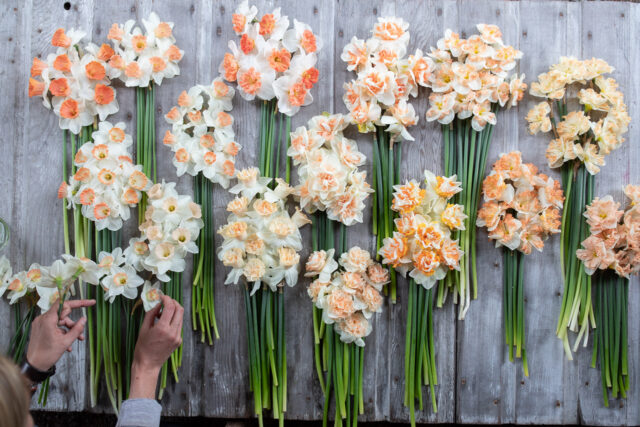
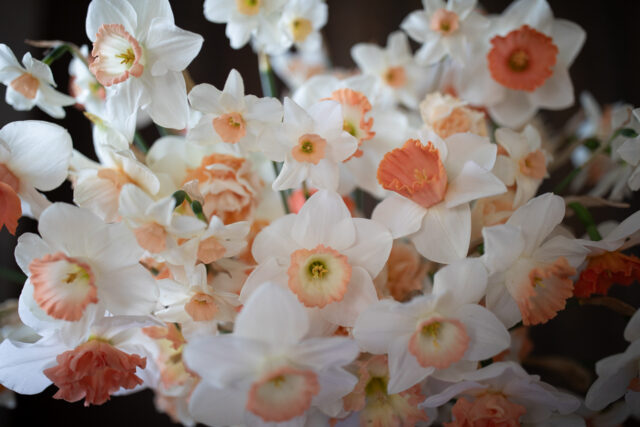 You can find varieties that are miniature, fragrant, ruffled, double bloomed, and multicolored. Besides varying shades of yellow, some have peach, salmon, white, or apricot blooms. A stem might have one huge, trumpet-shaped flower or many miniature ones. Some are fragrant; others could easily be mistaken for peonies or orchids.
They are hardy, easy to grow, and rarely plagued by pests or disease. They also multiply rapidly, which means that if you make a small initial investment in bulbs, you’ll be rewarded with more and more blooms in the coming years.
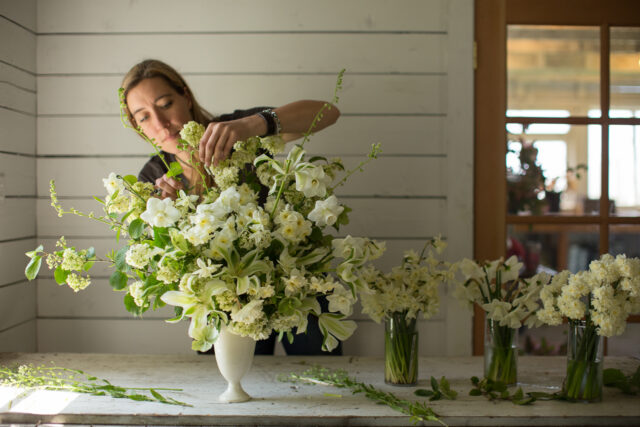
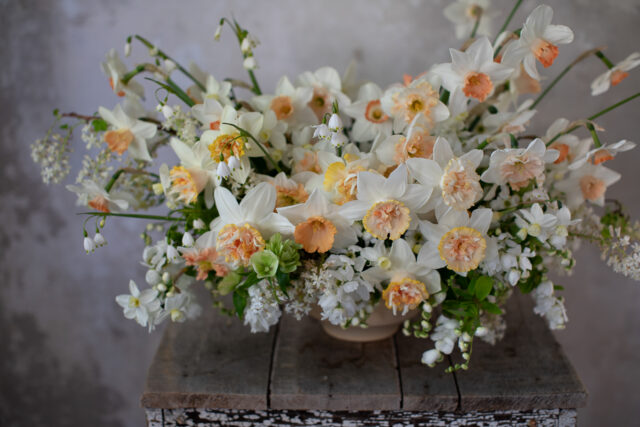 In addition to being so low maintenance and easy to grow, daffodils are excellent for cutting, and they last nearly a week in the vase if they’re picked at the right stage. For the longest vase life, harvest blooms before they’ve fully opened when the buds are still slightly nodding, also known as the “gooseneck” stage. If you’re making arrangements, you can pick flowers on the more open side, but they won’t last quite as long.
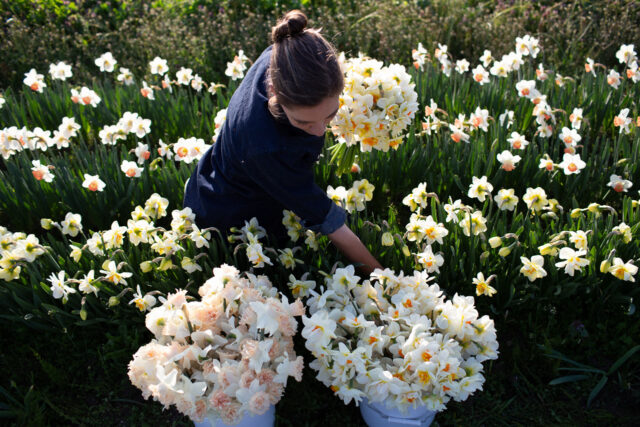
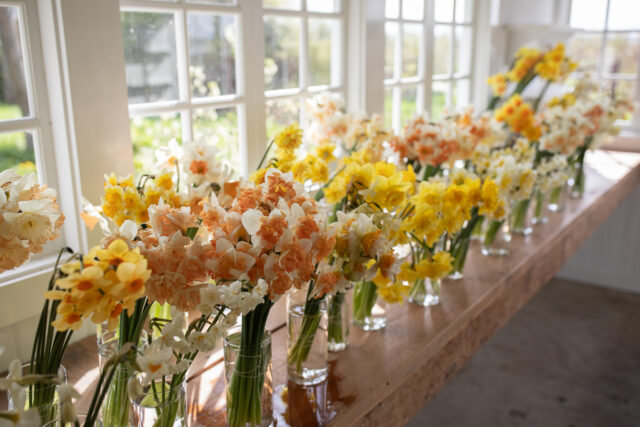 Their stems ooze a slimy sap, so be sure to wear gloves when picking. This slimy sap is toxic to other flowers, and their vase life will be significantly shortened if they are combined with freshly picked daffodils. To avoid affecting other blooms in an arrangement, you’ll need to condition the daffodils first.
To do this, place freshly cut stems into cool water, on their own, for 2 to 3 hours. During that time, the stem ends will callous over and the sap will stop flowing. After that, they can be added to arrangements—just don’t recut the stems because they will start leaking again. If you’re arranging daffodils on their own, no special conditioning is required.
To see how we grow daffodils here on the farm and a little picking demonstration, watch Floret Farm Tour: Daffodils.
April
 Tulips
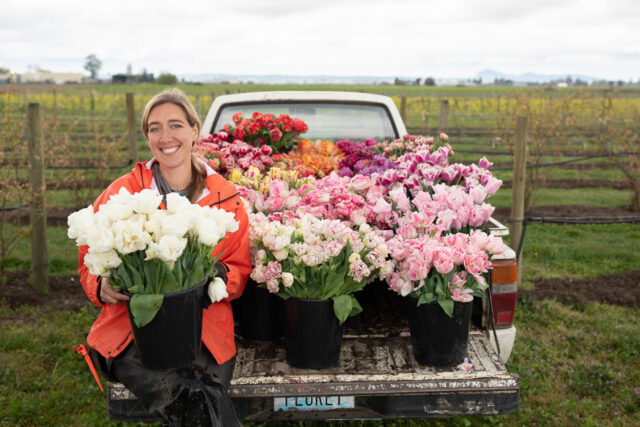
Our farm is located in one of the largest tulip bulb–producing regions in the U.S., and each spring more than a million people flock to our little valley to see the flower fields in full bloom. While most of the varieties grown on a massive scale have the traditional flower form and a more narrow color range, there is a whole world of options available if you do a little digging, including flowers with petals that are fringed, pointed, ruffled, and striped. Some are so full that they are commonly mistaken for peonies, and nearly all varieties have an excellent vase life.
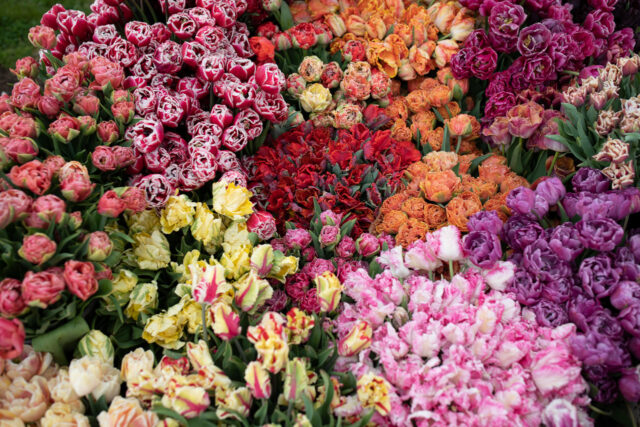 In addition to being such great cut flowers, tulips are some of the easiest bulbs you can grow, and you can squeeze a surprising amount of them into a very small space. Check out this resource for growing information, and be sure to visit the Floret Library to explore some of the beautiful options that are available.
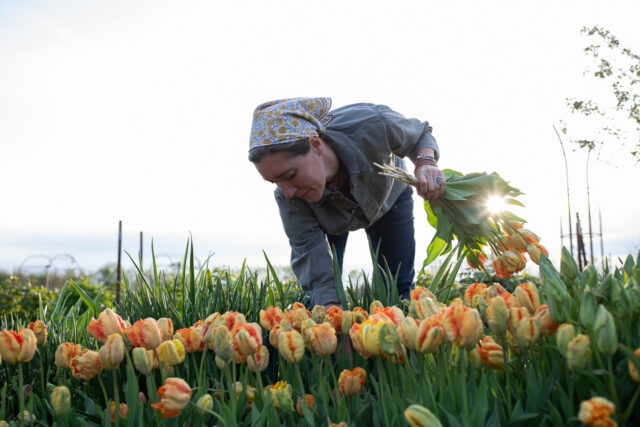
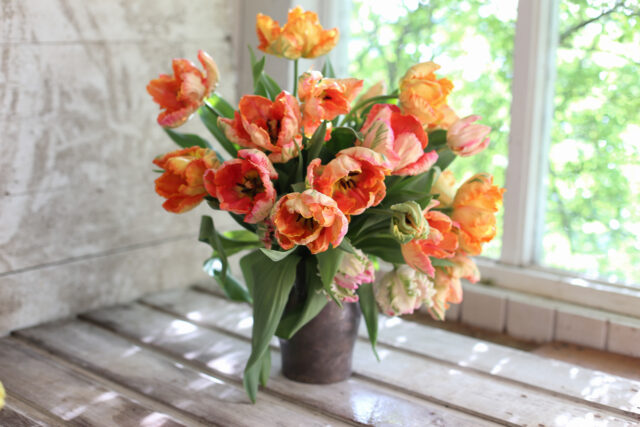 For the longest display, harvest when the flowers are still in bud, with just a hint of color showing on the outer petals. Keep in mind that once you place them in water, fresh-picked stems will elongate during the first few days, so if you’re adding them to an arrangement, nestle the flowers down deeper than you ultimately want them to be.
 Anemones
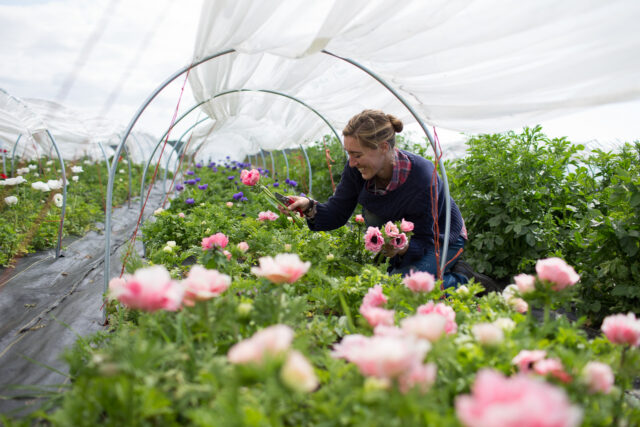
One of the most productive spring-blooming flowers that we grow, anemones flower abundantly for up to 3 months, often producing more than 30 flowers per corm.
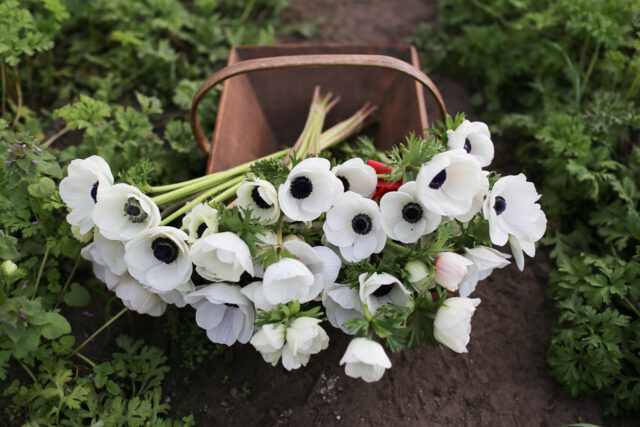 They are hardy, relatively easy to grow, and crank out such an abundance of flowers that they are hard to beat. They also last an extremely long time in the vase, more than 10 days if harvested shortly after they open.
 Ranunculus
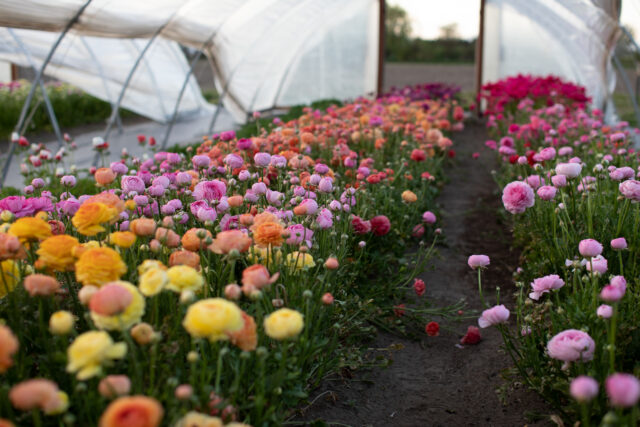
Often referred to as the rose of spring, ranunculus are some of the most popular and beloved cut flowers on the market these days. Because they have so many wonderful qualities, including tall stems, double ruffled blooms, a light citrusy rose fragrance, and one of the widest color ranges imaginable, it’s impossible not to fall in love with them. Plants are on the tender side and have a few special growing requirements, but once you master them, you’ll be generously rewarded.
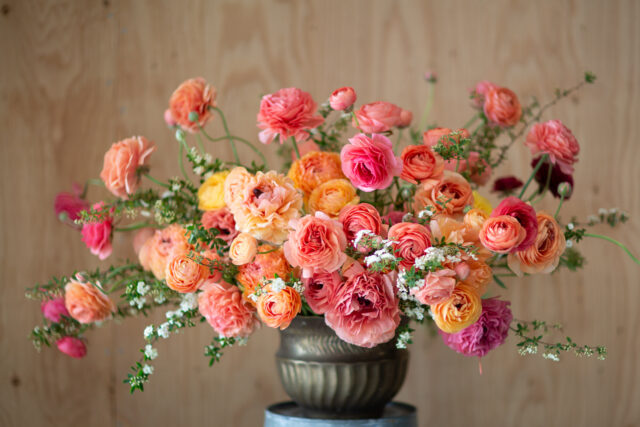
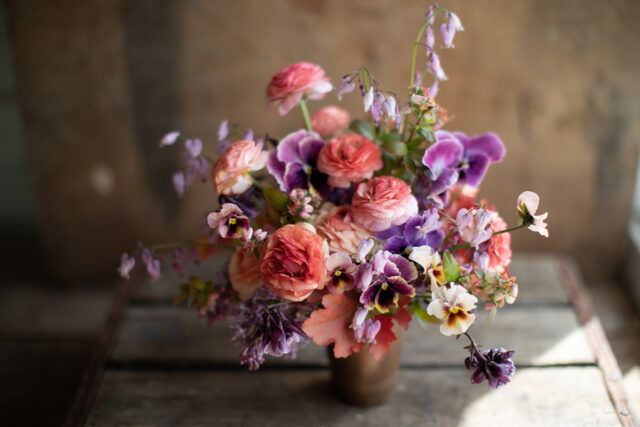 Ranunculus have an outstanding vase life, often exceeding 10 days. Cut when buds are colored and squishy like a marshmallow, but not yet fully open. If the blooms are open when they’re cut, they’ll still last a week but are a bit more fragile.
To learn more about growing both anemones and ranunculus, check out this video and printable guide.
May
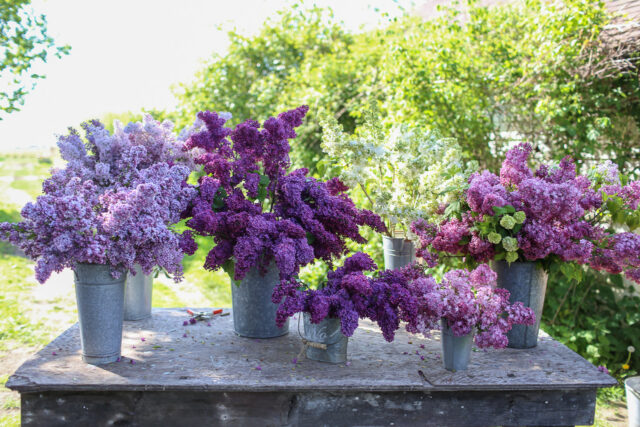 Lilacs
Lilacs are one of the most nostalgic flowers of all time and their scent has the ability to bring back such powerful memories. If you’ve ever given someone a handful of freshly picked lilacs, you’ve probably experienced this for yourself.
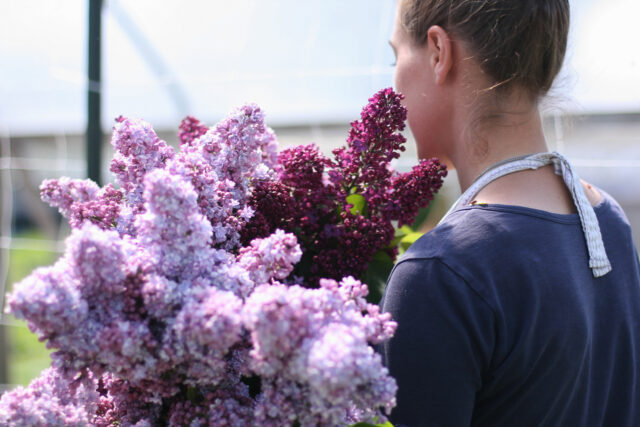
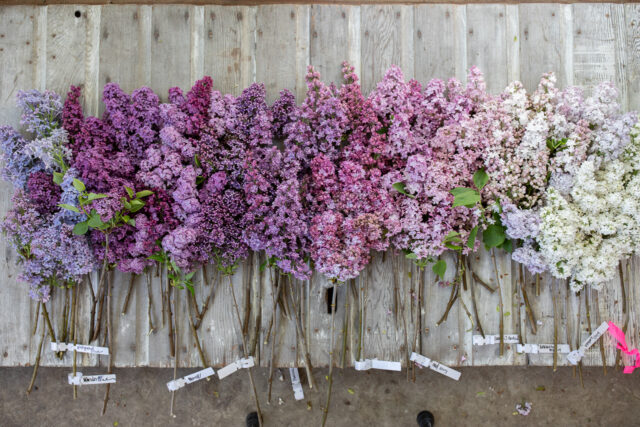 I’ve been collecting as many rare lilac varieties as I possibly can and currently have more than 140 different cultivars growing here on the farm. You can find the varieties we’ve documented so far in the Floret Library.
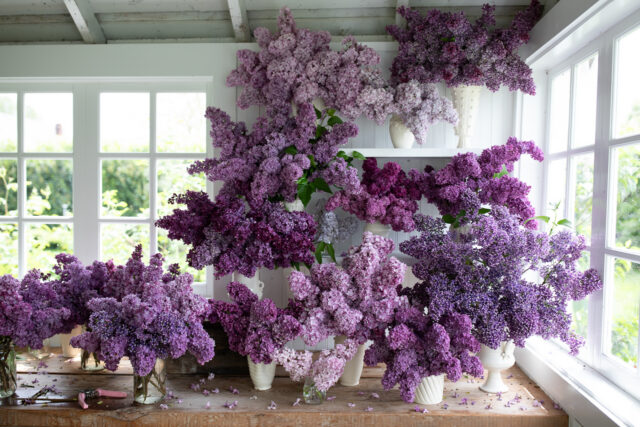
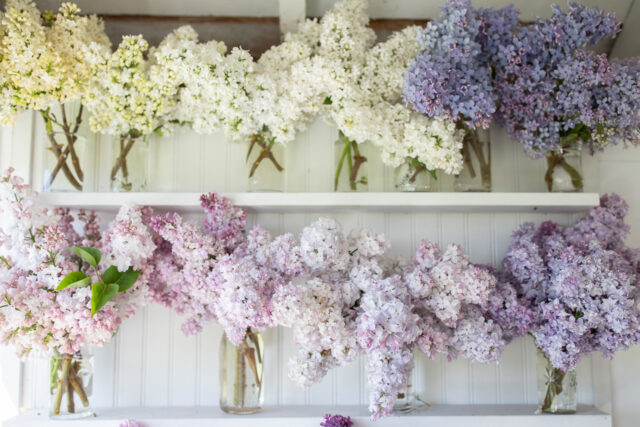
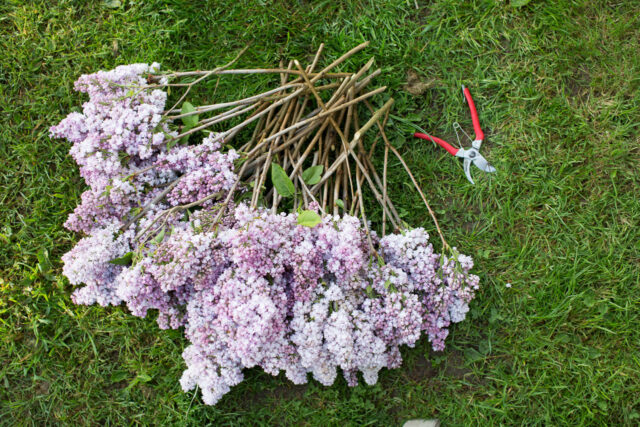 Since they flower for just a few short weeks, I try to make and share as many bouquets as possible during their fleeting bloom window. There’s nothing more luxurious than filling every room in the house with big jugs of freshly picked lilacs—the smell is amazing!
For the longest vase life, it’s important to pick flowers at the right stage and condition them. Harvest when one-half to three-quarters of the flowers on the bloom cluster are open and immediately remove most or all of the leaves. Split the stem ends, place them in cool water, and let them rest for 3 to 4 hours before arranging. You can watch a video with detailed harvest instructions here.
 Peonies
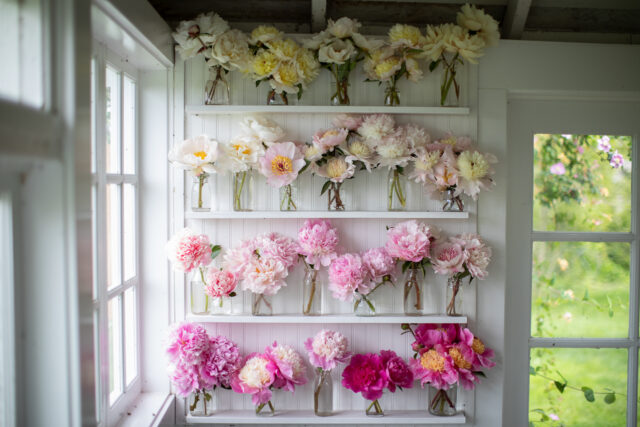
Peonies have one of the most loyal and devoted fan clubs of any flower I know. Few flowers can rival the overwhelming beauty of these queens of spring. Their large flower heads and billowy, ruffled blooms come in a dizzying array of pinks, corals, burgundies, whites, yellows, and reds. Many carry a sweet fragrance, and most are long lasting as cut flowers.
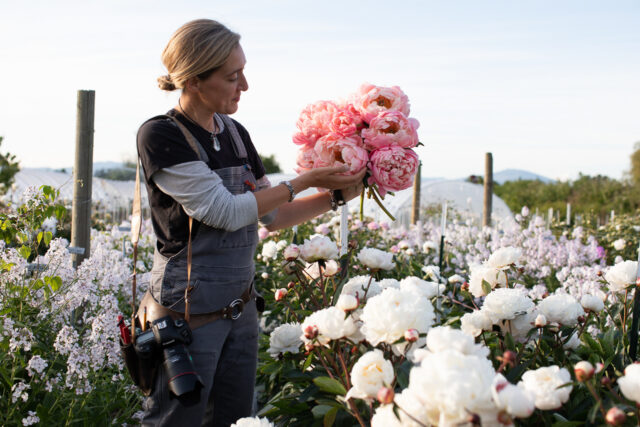
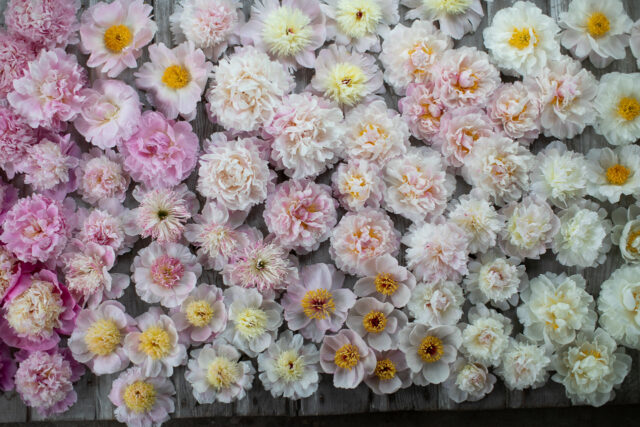 We have a large patch dedicated to these beauties, and while it includes a number of the big, full-flowered varieties, I’m becoming more and more drawn to the weirder, more novelty types, including Itohs, singles, and Japanese forms. You can explore the different types in the Floret Library.
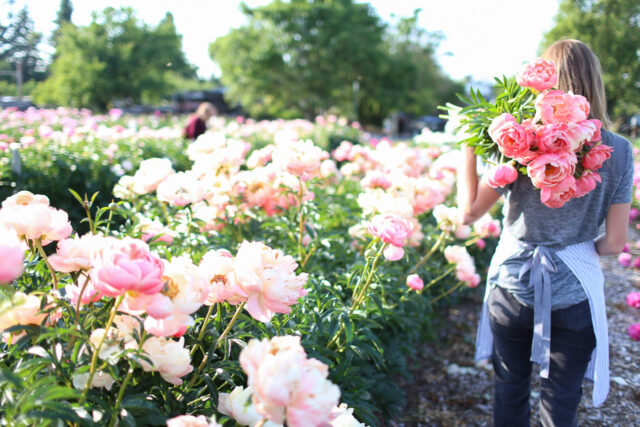
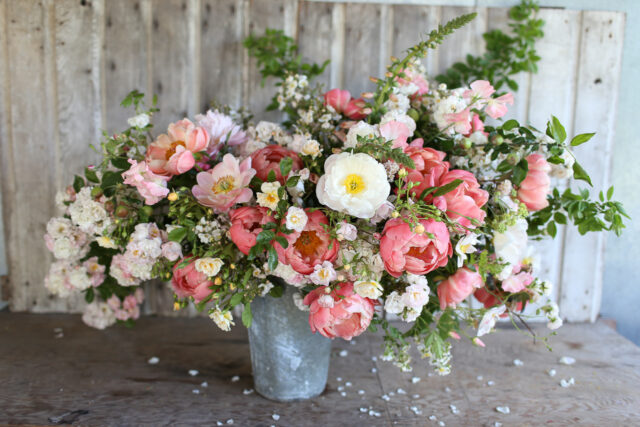 If they’re picked at the right stage, peonies last quite well in the vase, 5 to 7 days. You’ll get the most out of them if you can catch them while the buds are still partially closed and feel like a soft marshmallow when squeezed. I always get lots of questions from gardeners who are worried because they find ants crawling on their flower buds. Don’t worry, this is nothing to be concerned about; they are just feeding on the sweet, sugary sap. You can brush them off or rinse buds under a gentle stream of water.
 Bearded Iris
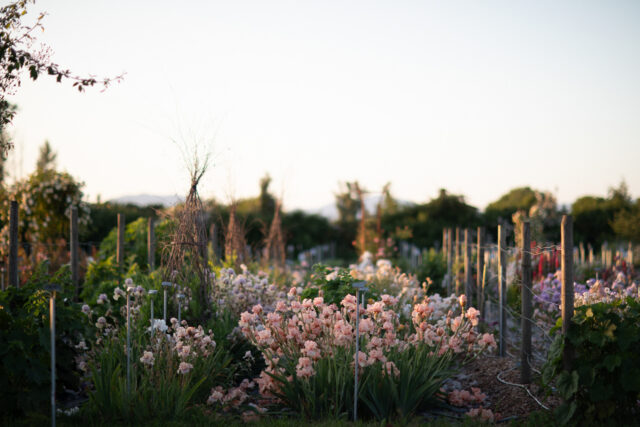
I’ve been growing bearded iris for the past several years, and each year, as my collection of varieties grows, I fall more and more in love with them. They bloom during that awkward gap between the last of the spring-flowering bulbs and the first perennials and hardy annuals. Every season, as their flowers unfurl, I’m so thankful that we have them.
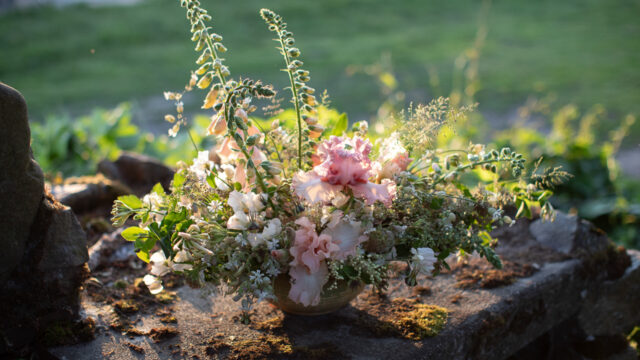
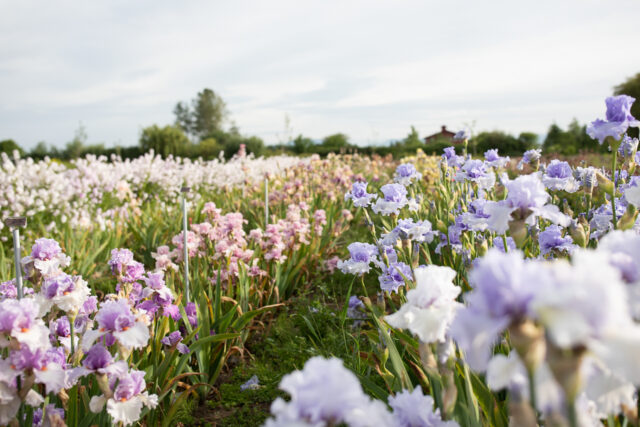 Their fragrant, statuesque blooms come in a wild spectrum of colors that includes some of the most unusual hues in the flower world, including blue, brown, silver, and even black. They also multiply readily, so once you make an initial investment in rhizomes, you can divide and increase your stock year after year.
We made a beautiful little film about the iris farm that sparked my obsession with these unusual plants, which you can watch here. They celebrated 100 years of growing iris in 2025!
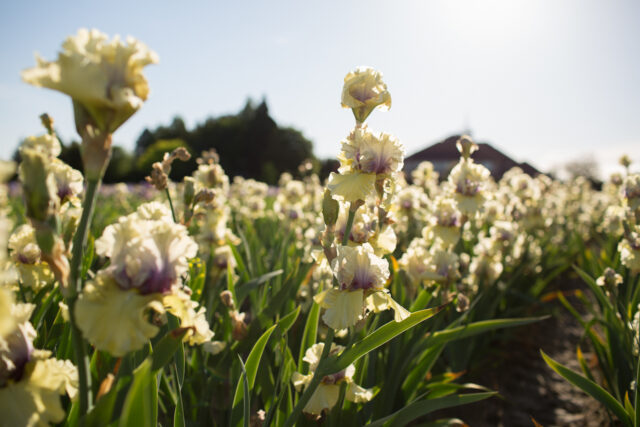 Bearded irises are very fragile once they’re open, so it’s important to pick them when they’re in the “pencil” stage, when blooms are still closed but an inch or two of color is showing at the tip. Although individual flowers don’t have the longest vase life (3 to 4 days), if you keep removing flowers as they age and begin to fade, new flowers will continue to open up the stem, so one branching stem can give you up to 10 glorious days of bloom.
June
 Biennials
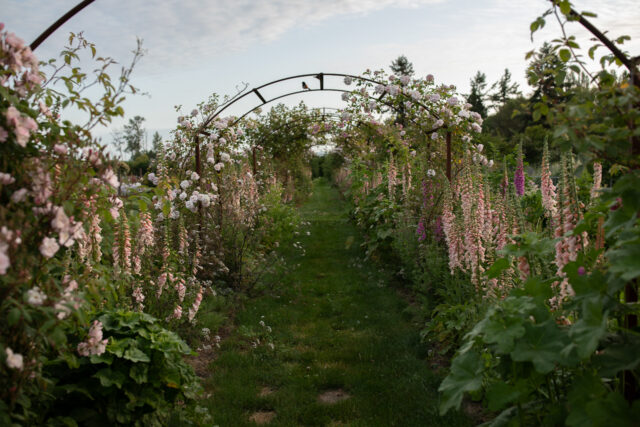
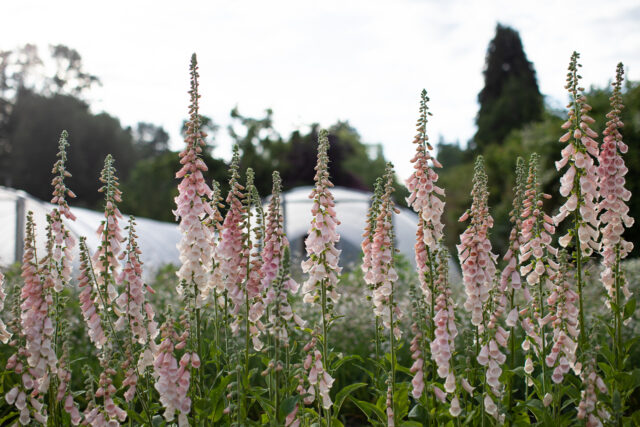
This unique group of plants includes many of the most beloved cottage garden favorites, such as Canterbury bells, sweet rocket, foxglove, lunaria, and sweet William. These abundant bloomers fill the wide gap between the last of the tulips and the first perennials in the garden. While they have a tricky growing cycle, if you can get their timing right, they will reward you with an overwhelming abundance of blooms each season. If you want to learn how to grow them and see some of my favorite varieties, be sure to read this post.
 Pansies
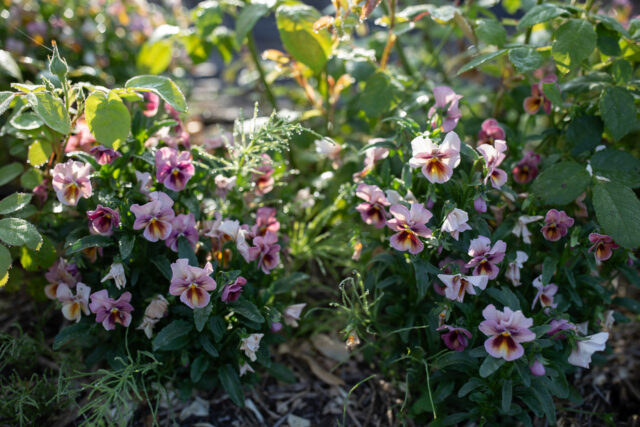
Pansies and violas are being used more and more frequently in floral design, in part because of the 2025 publication of a book by author and flower farmer Brenna Estrada. Pansies does a deep dive into this incredibly special flower and is a treasure trove of information. The book features 50 of the best pansy and viola varieties that are currently available and includes plenty of inspiration for using these sweet, cheerful little flowers in arrangements.
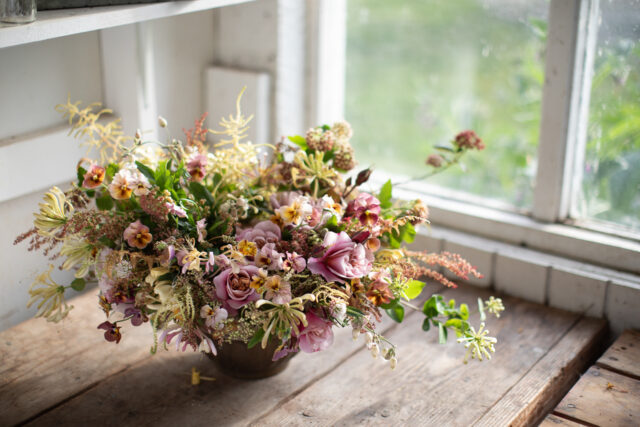
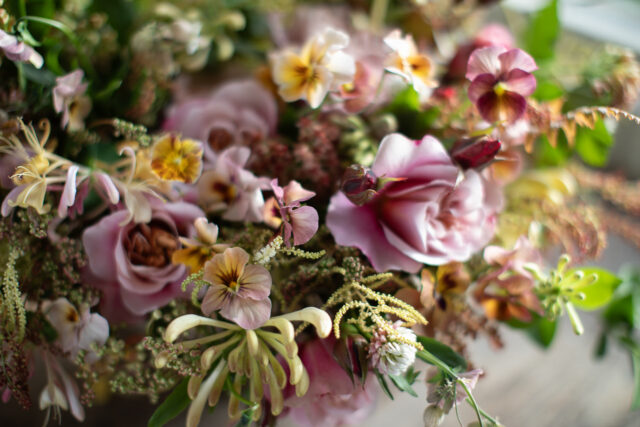 Pansies and violas are easy to grow, cold tolerant, and suitable for small spaces and containers. They have beautiful coloring, and many varieties can produce stems that are long enough for cutting if you are patient and wait for the plants to stretch out. Pansies have a more stocky growth habit and produce larger-faced flowers, while violas have a more airy and wild growth habit and much smaller flower heads. Both are pure magic!
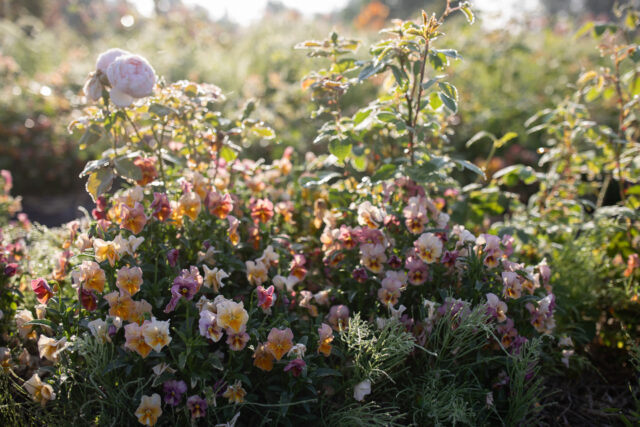 Pansy stems are quite fragile, so they must be harvested with care, but the flowers last an unbelievably long time in the vase. As the lower flowers on the stem begin to fade, new ones appear. They look beautiful for well over a week in plain water and for more than 10 days with flower food.
If you want to learn about the big pansy and viola trial we conducted, be sure to read Pansies & Violas for Cut Flowers.
 Roses
Roses
Oh roses—where do I even begin? I’ve had a long and winding road with these fragrant beauties, and a few years ago I adopted a huge collection of heirloom treasures to help ensure that they don’t become extinct. You can learn the backstory here.
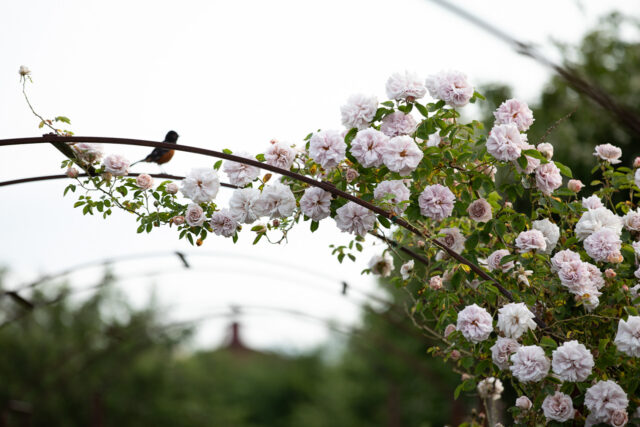
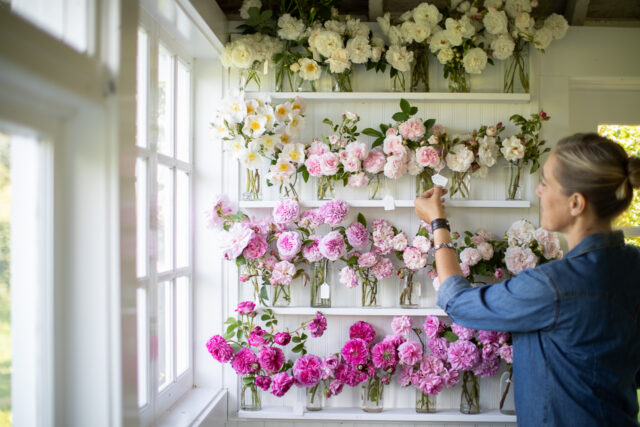
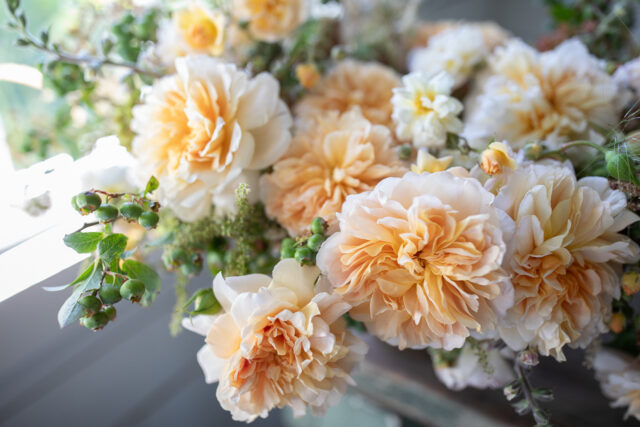 In addition to growing hundreds of rare, rambling, and species roses, we also have quite a collection of English roses bred by David Austin. These varieties are some of my absolute favorites for cutting because they have the look and feel of an old rose, but bloom all season long. My favorite thing to do each June is to make a rainbow shelf and squeeze as many varieties onto it as I can.
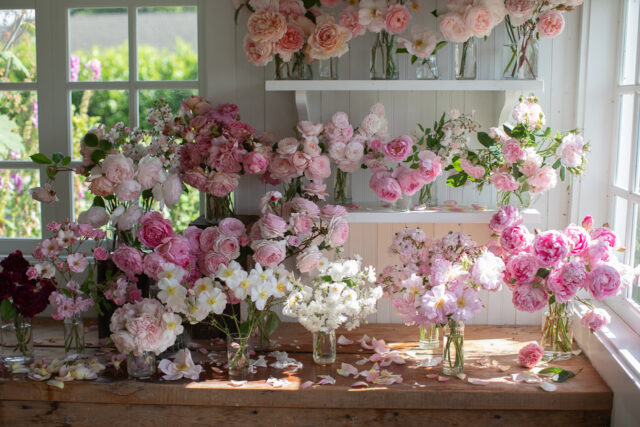
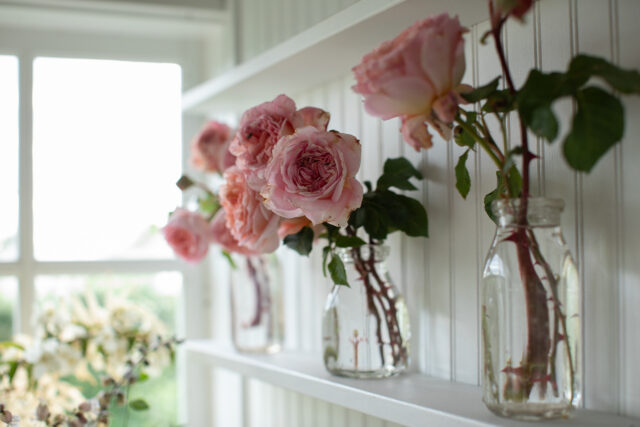 While our garden-grown roses don’t last nearly as long as the ones that you buy from the store, their fragrance and delicate beauty totally make up for it. I try to pick flowers when they are half to three-quarters open to get a few extra days in the vase. There is nothing prettier than when roses finally let go and sprinkle their petals everywhere.
 Sweet Peas
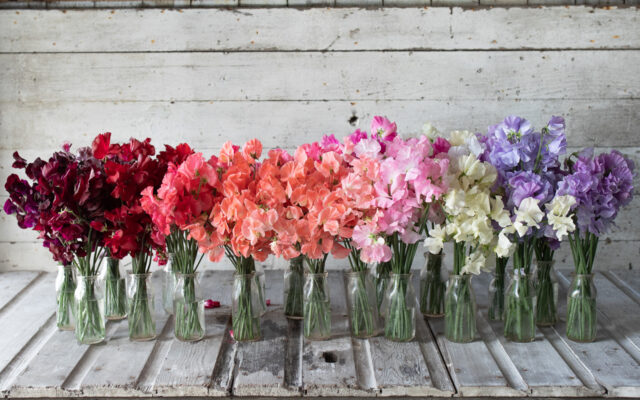
Of all the flowers you can grow, few are more magical or rewarding than sweet peas. These nostalgic flowers produce an abundance of fragrant blooms from late spring through midsummer and are the source of untold happy flower memories among gardeners. They were also the gateway to my whole flower-growing adventure. Over the years, I’ve grown and documented well over 100 varieties, which you can find in the Floret Library.
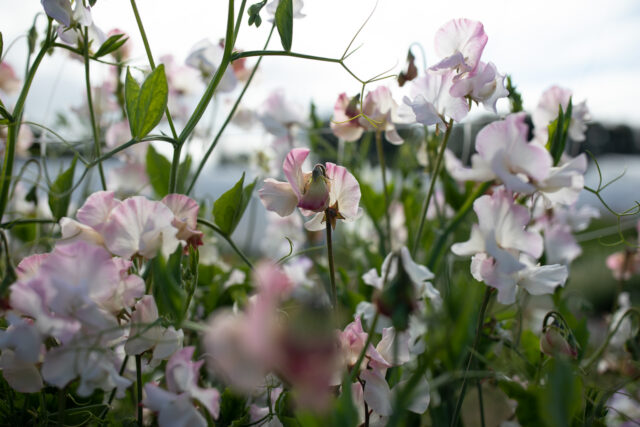
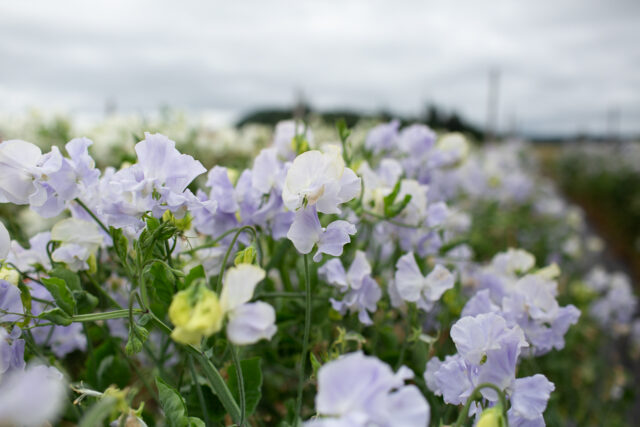 In addition to being beautiful, fragrant cut flowers, sweet peas are also a wonderful source of foliage. Their lush, vining tendrils make a magical addition to arrangements of any size, from petite posies all the way up to large, showy urns.
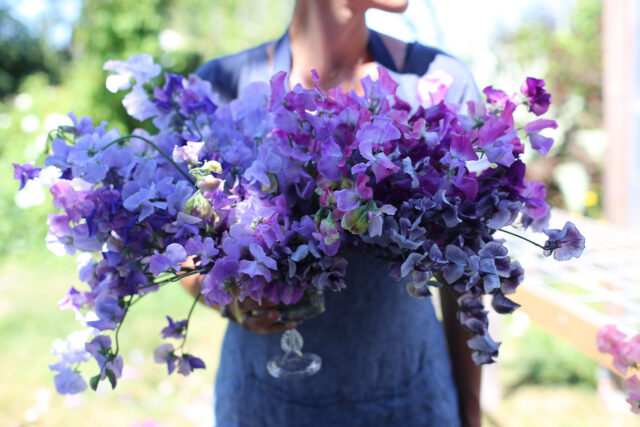
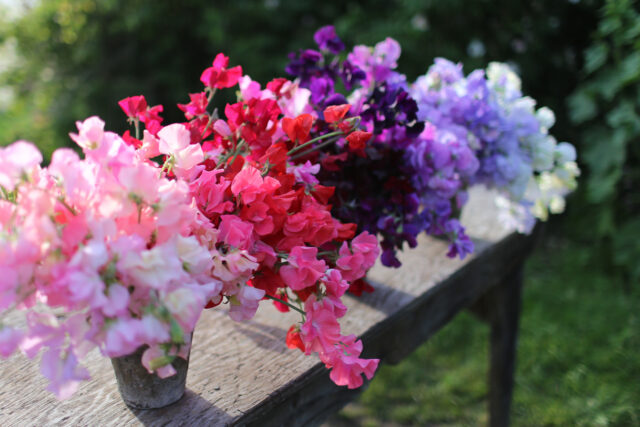 Sweet peas produce abundantly and need to be picked every few days in order to keep up with their blooms. I like to comb the rows every other morning so that I catch flowers right at their prime. For the longest vase life, pick stems that have at least 2 unopened flowers at the tip. While they can be harvested when they are more open, their vase life won’t be quite as long.
As a cut flower, sweet peas are relatively short-lived, lasting at best 4 to 5 days in the vase; you’ll get the best results if you add floral preservative to the water. Foliage can be picked at any time, but take care when harvesting to gently untangle the vines so that you don’t break the stems. If you want to learn how to sow sweet pea seeds and get plants off to a good start, check out this resource.
July
 Clematis
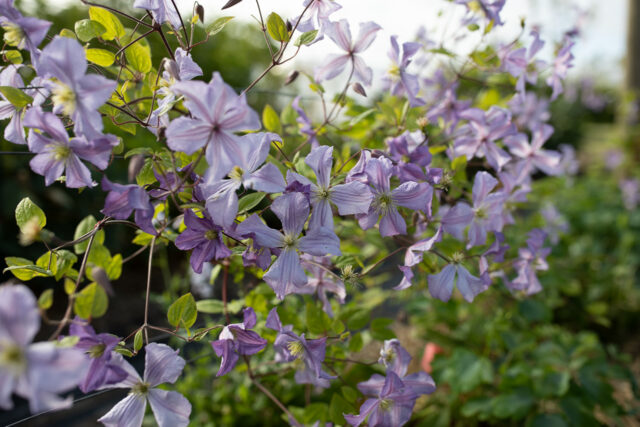
I was first introduced to the beauty of clematis as a cut flower during a workshop taught by Ariella Chezar. She created the most stunning arrangements using freshly picked flowers from the fields of Chalk Hill Clematis, where the class took place. After her demonstration, we were turned loose to pick buckets and buckets of these magical vines for our own bouquets.
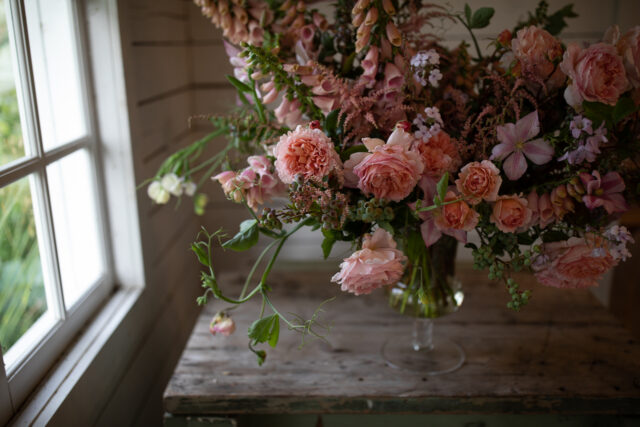
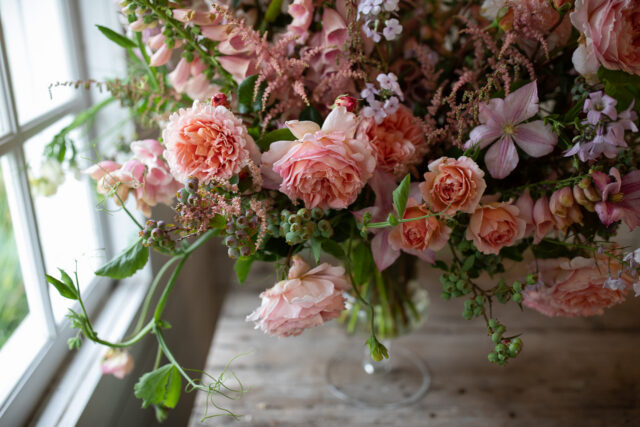 I came home from the class so inspired and started adding as many varieties to the garden as I could get my hands on. There’s an incredible amount of diversity in this group of climbing plants; some get so large that they will scramble up the side of a building, while others have a bushy habit and only grow knee-high. Some bloom for a brief window, while others flower all summer long and then leave behind showy seedpods that persist through the winter. Some varieties produce only a handful of large, showy, star-shaped flowers at a time, while others are smothered for months in an abundance of miniature, hanging bells that look like fairy flowers.
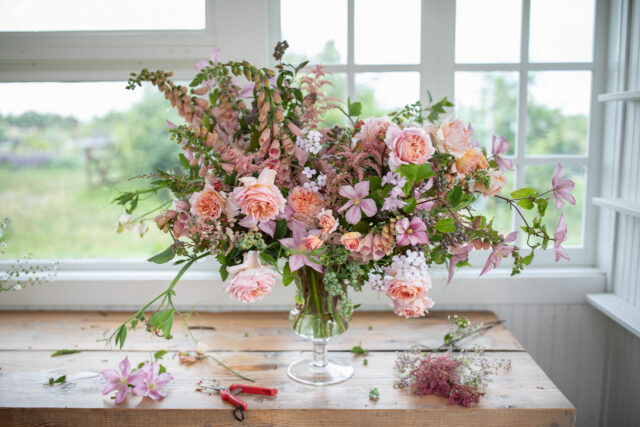 Harvest blooms when one-quarter of the flowers on a stem have opened. For foliage, harvest when stems and leaves become leathery. When harvesting the vines, take care to gently untangle them as you work to prevent breaking their wiry stems.
 Lilies
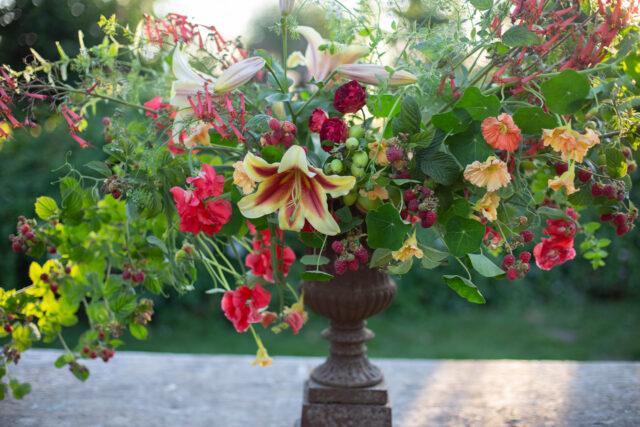
Of all the flowers that I’ve grown over the years, lilies seem to elicit the strongest reaction from other gardeners—they either love them or hate them. Personally, I adore them and think there’s nothing more wonderful than catching their sweet, sugary scent in the air.
With towering stems and waxy, trumpet-shaped flowers, lilies are the queens of the early-summer garden. They come in a dazzling range of colors, including red, orange, yellow, pink, white, and even almost black. Some have stripes or freckles on their petals and some have double, ruffled blooms.
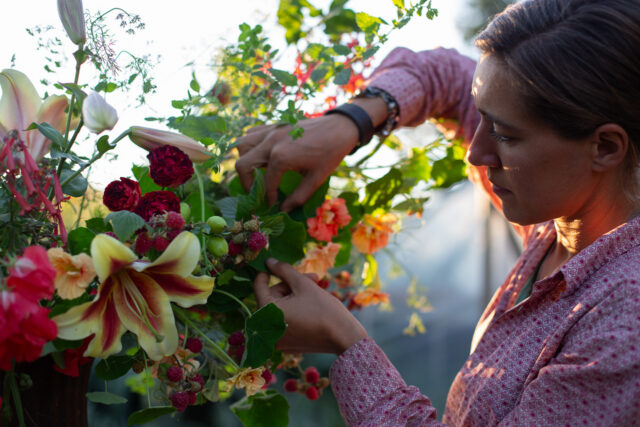
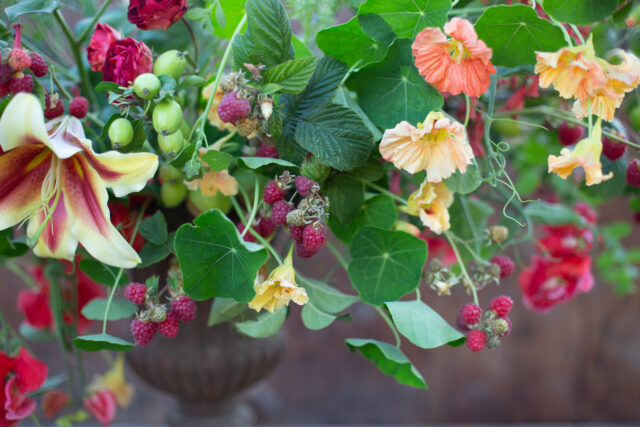 One of the best surprises when you start growing lilies is discovering that each year they get bigger and more loaded with flowers. Our mature stands of lilies that are 3 to 4 years old are now taller than I am, and each stem carries 15 to 30 fragrant, waxy blooms!
Lilies are an extremely long-lasting cut flower and generally persist up to 10 days in the vase, opening slowly over time. Once the blooms open, their petals will bruise and break easily and they become much harder to transport, so harvest when they’re still in bud and the bottom flower is just beginning to open. Lily pollen can easily stain, so as soon as the blooms crack open, use a tissue to gently pull off the brown pollen anthers before they turn orange and fuzzy.
 Edibles
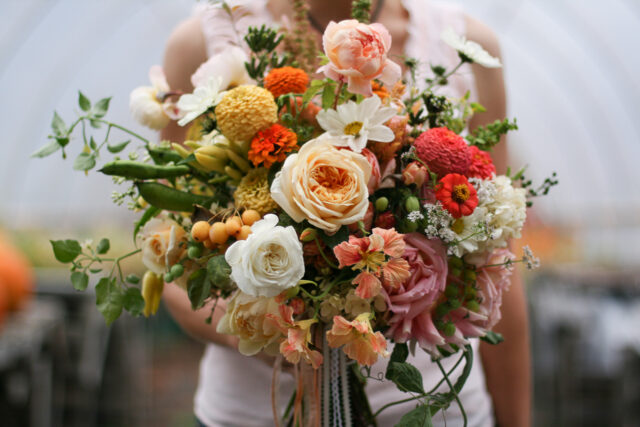
One of my favorite things to include in any bouquet is some kind of edible ingredient, and the more recognizable the better. Over the years I’ve tucked carrots into a famous chef’s bridal bouquet, included chili peppers and tiny eggplant in food-loving grooms’ boutonnieres, sprinkled clusters of cherry tomatoes through hundreds of centerpieces, added raspberries to guestbook displays, and woven scented herbs into as many floral designs as I could manage.
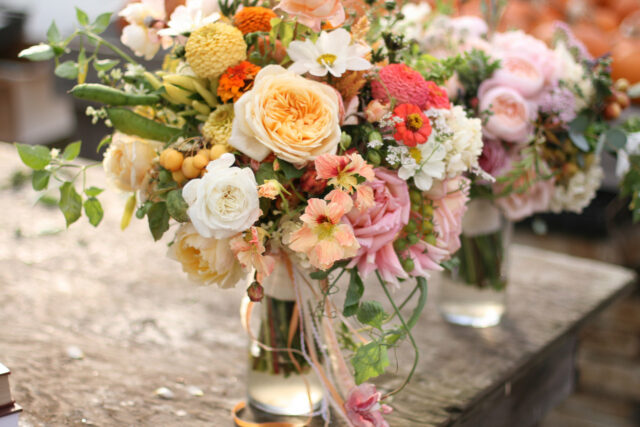
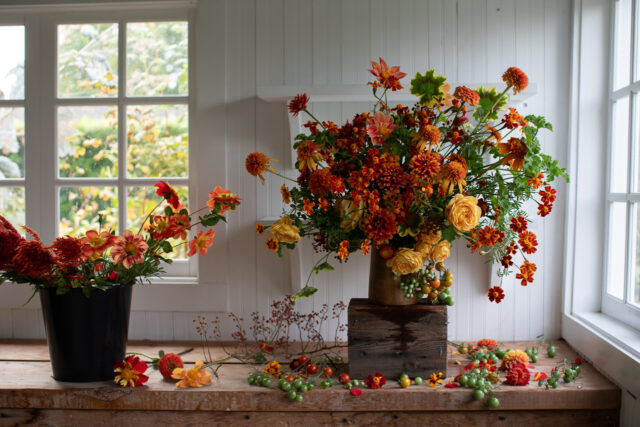 I highly encourage you to grow some edibles alongside your cut flowers. They are not only beautiful for arrangements, but also wonderful for eating. Many edible varieties are easy to grow from seed, love the heat, and produce abundantly from summer through the first fall frost. They also produce wonderful foliage. Some of my favorite edibles for floral design include tomatoes, unripe berries and fruit, such as blueberries and raspberries, and herbs, such as basil, dill, and oregano. If you want to read all about my favorite edibles for floral design, read this blog post.
August
 Zinnias
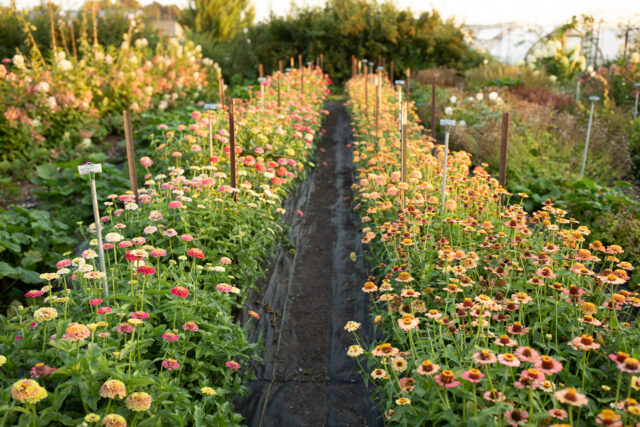
These heat-loving flowers are some of the easiest you can grow and bloom abundantly from midsummer through autumn. They come in a wide range of colors, sizes, and shapes, from tiny buttons to big, cactus-like blooms. They churn out buckets and buckets of long-stemmed flowers every week, and the more you pick them, the more they bloom.
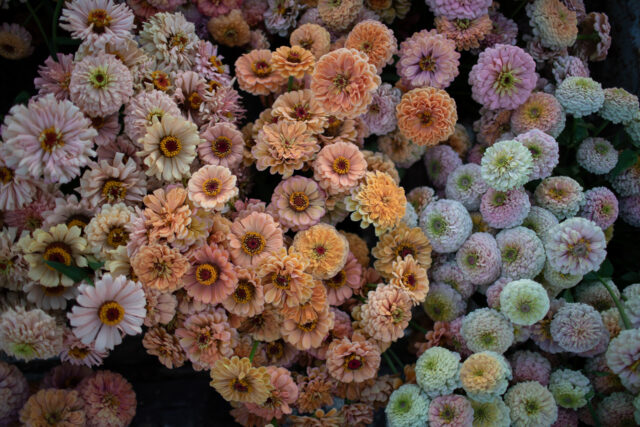
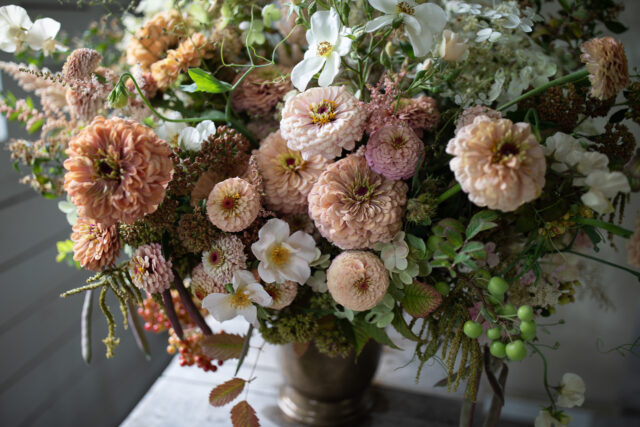 We’ve been hard at work breeding new varieties that come in a soft pastel range and are perfect for bouquet making. You can learn more about these special Floret Original varieties here.
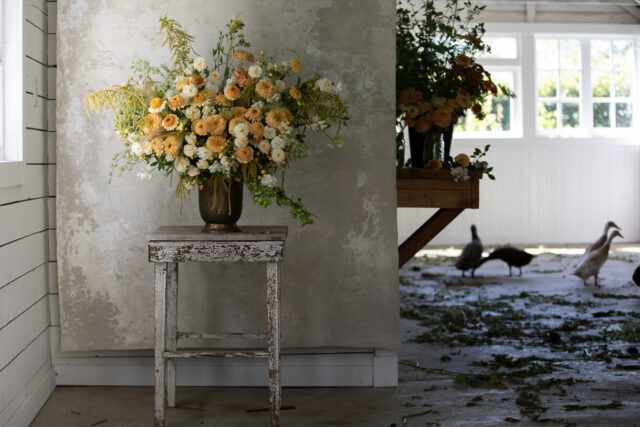 One of the biggest mistakes that people make when harvesting zinnias is picking them too soon. The best way to tell whether a bloom is ready to pick is to grab the stem about 8 in down from the flower and gently shake it. If the stem is droopy or wobbles when wiggled, it is not quite ready to cut. If the stem remains stiff, it is ready to pick. Zinnias typically last a week in the vase, and because they are “dirty” flowers, they benefit from having floral preservative added to their water.
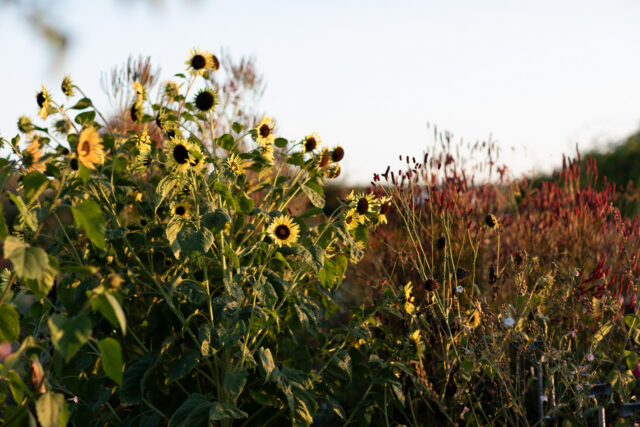 Sunflowers
It’s no wonder that sunflowers have long held the top spot as the most commonly grown cut flower worldwide—they are ridiculously easy to grow, thrive during the dog days of summer and early autumn, bloom abundantly, and require very little attention to thrive. They are also one of the very best flowers to arrange en masse.
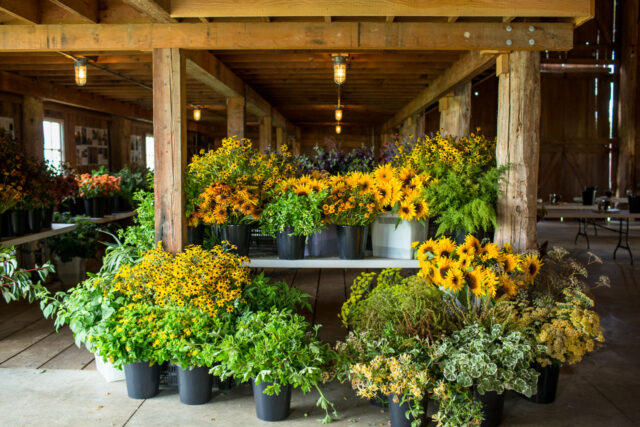
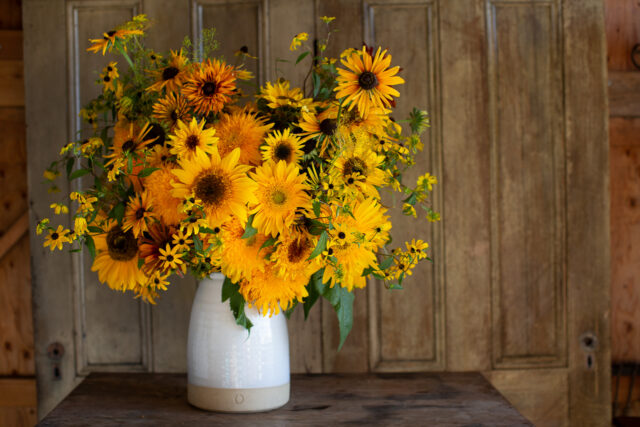 As summer fades and early autumn arrives, sunflowers are at their prime, and one of my favorite ways to usher in the changing seasons is by creating a big, textural arrangement filled with their glowing blooms.
For the longest vase life, pick flowers as soon as their first petals start to unfurl, before the bees get to them, and strip the bottom three-fourths of the leaves from the stem.
To learn how to grow sunflowers and explore some of my favorite varieties I’ve grown over the years, be sure to read Favorite Sunflowers for Cutting.
September
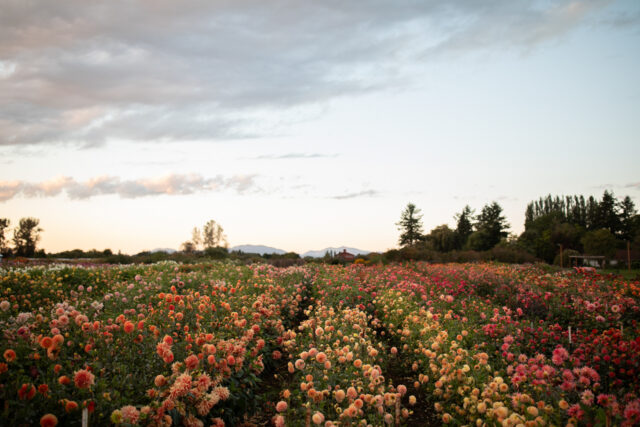 Dahlias
Dahlias start flowering abundantly in August and continue blooming in abundance until frost, but September is really their peak. Flowers come in every shape, size, and color imaginable and they are one of the most popular cut flowers for good reason; the more you pick them, the more they bloom. You can explore hundreds of these beauties in the Floret Library and in our book Discovering Dahlias.
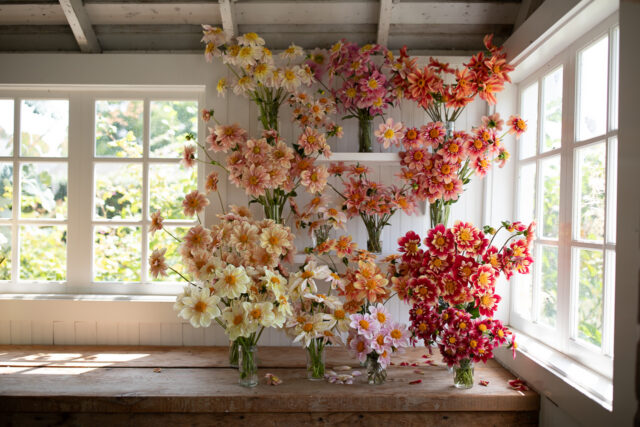
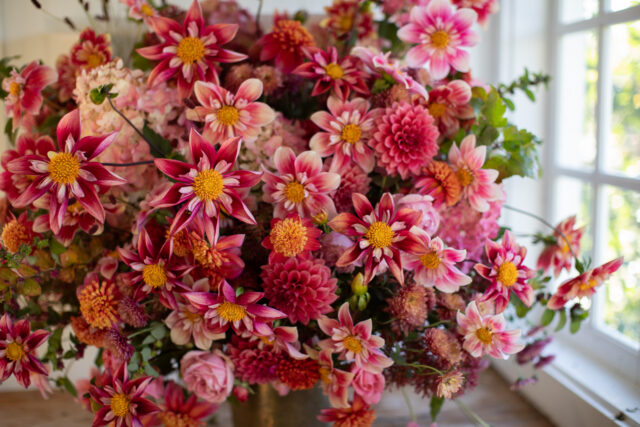 The single-flowered and collarette varieties are normally the first to arrive. I’ve been hard at work trying to develop new varieties with these flower forms that have both beautiful, unusual coloring and an improved vase life. When picking open-centered dahlias, it’s important to catch them before the bees do, just as their petals are starting to open.
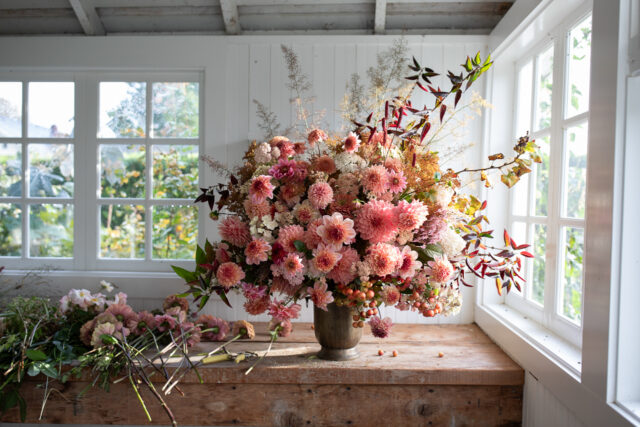
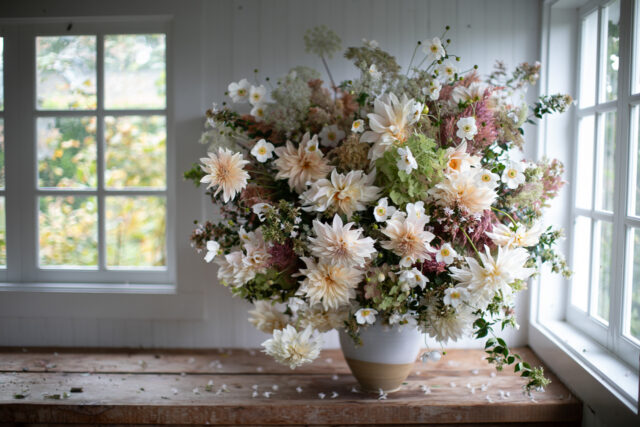 As the days grow shorter, many of the enormous dinner plate varieties start to produce slightly smaller flowers, and their centers start to pop open. I love threading some of these open-centered blooms into a grand arrangement to give it a more casual, wildflower-like feel. My favorite way to arrange bigger blooms is en masse because then they don’t outshine the other flowers.
While dahlias are not a particularly long-lasting cut flower—you can expect them to look good for about 5 days in the vase—their brilliant, colorful blooms make up for their fleeting existence. Since full-flowered dahlias don’t unfurl much after they’ve been harvested, it’s important to cut them when they’re almost fully open. Check the back of each flower head, looking for firm and lush petals; papery or slightly dehydrated ones signal old age.
 Hydrangeas
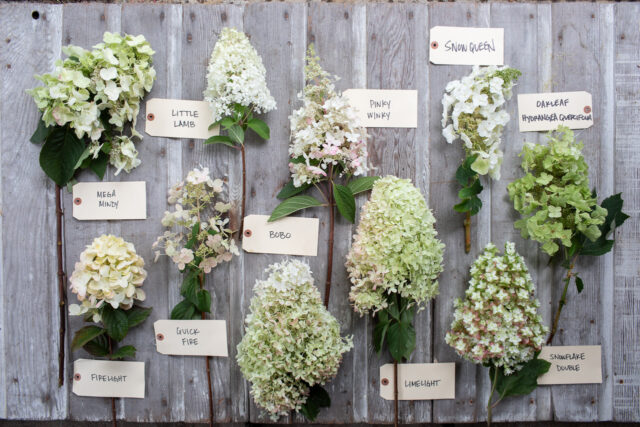
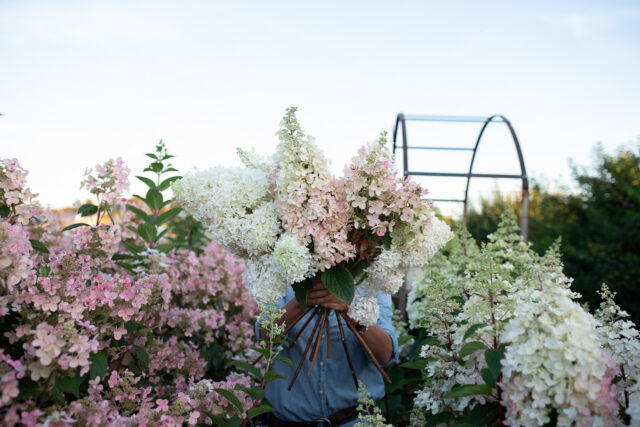
When most people think of hydrangeas, they picture the big, blue mophead types that are grown in great abundance all along the East Coast. But I am much more partial to the PeeGee varieties, which look like large, creamy cones. They are incredibly productive and very easy to grow.
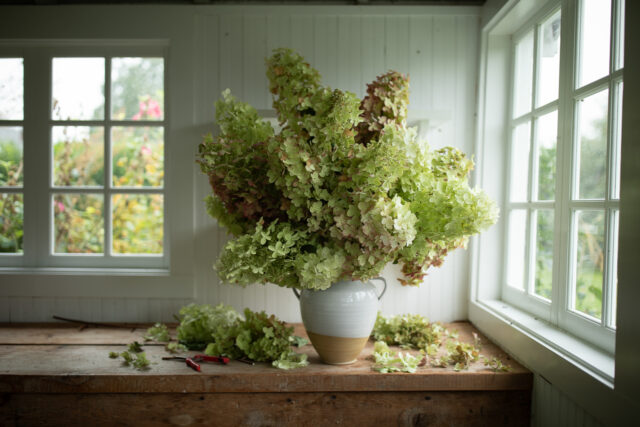
 The best part is that they bloom on new wood, so you can’t accidentally prune them incorrectly. In late winter, we cut our plants down to about 2 ft tall; the amount of pruning you do will depend on how large you want the flowers to be. If you prune PeeGee hydrangeas hard, the resulting flowers will be much larger; if you use a lighter touch, flowers will be smaller and more branching.
We grow a number of different varieties and have blooms from July all the way until the first frost. In September, their dense cones take on a cranberry wash and plants bend under the weight of their own abundance. There are few things more beautiful.
It’s important to wait to pick the flowers until the florets have developed all the way to the tip. If harvested too soon, they will wilt.
October
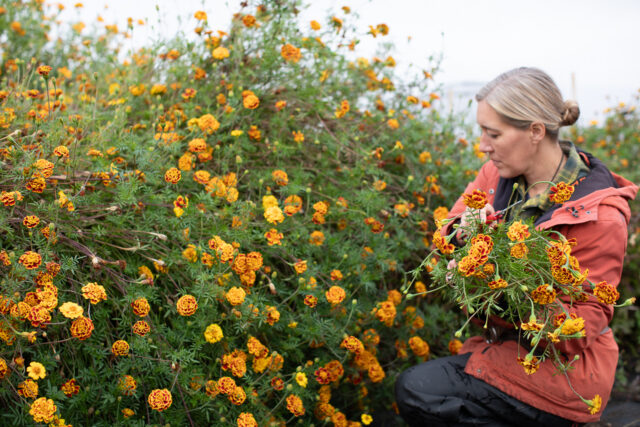 Marigolds
Each year as the garden starts to slide into autumn and the flowers become more tattered with every passing week, marigolds seem to come into their own and I am reminded why I love them so much. They are tough, easy to grow, thrive in the heat, pump out flowers from midsummer until the first fall frost, are nearly weatherproof, are ignored by almost all pests and diseases, and last an incredibly long time in the vase.
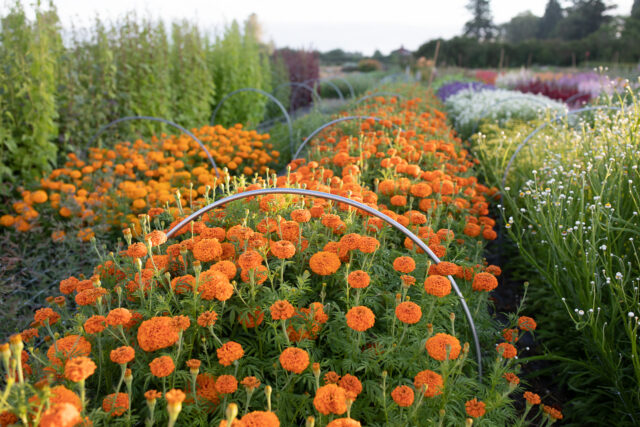
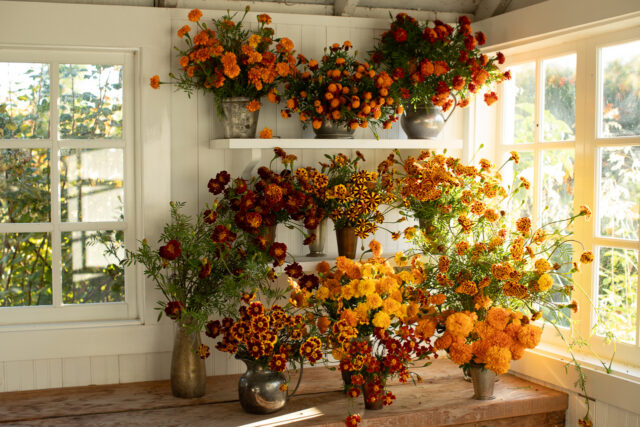 The plants and flowers are available in a wide range of shapes and sizes, but nearly all of them are fall toned. Peace Seedlings, a small seed farm in Oregon, has been doing some very exciting breeding work crossing French marigolds with the larger African types, resulting in big, bushy plants with lovely, medium-size flowers in very unique colors.
For the best vase life, pick when flowers are about one-half to two-thirds of the way open and strip the foliage off the lower part of the stem. Cut stems will last 10 days or more.
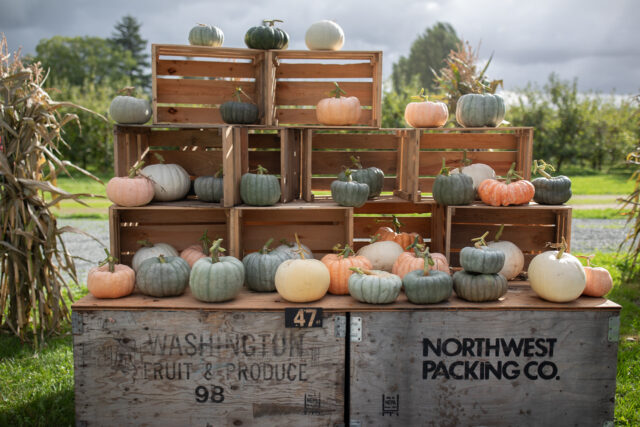 Ornamental Squash
My obsession with winter squash began when I worked at a produce stand during high school. Each autumn, as the weather turned cool and the leaves started to change, flatbed trucks filled with bins containing thousands of pumpkins, squash, and gourds would roll in from the fields. I was charged with decorating the stand and helping to set up the displays out front.
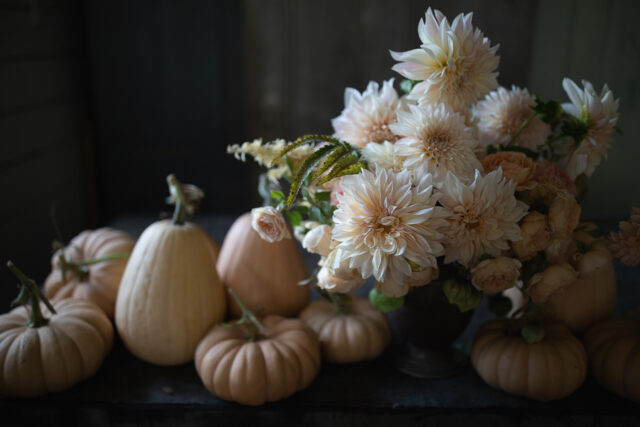
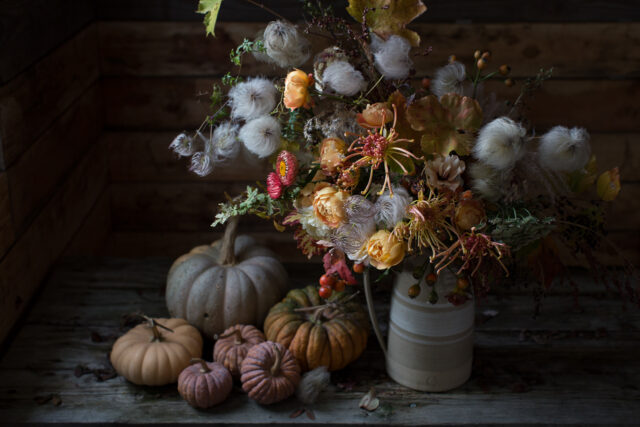
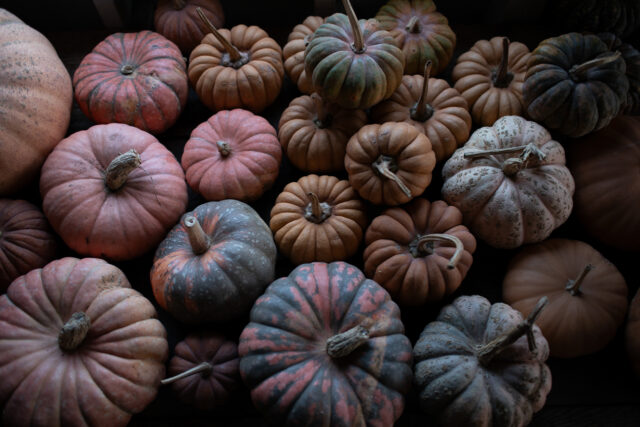 There’s nothing more beautiful than a big pile of antique-colored pumpkins and gourds scattered down a table, interspersed with jugs of fall-blooming flowers. The Floret Library features more than 50 varieties in a lovely range of colors, shapes, and sizes.
November
 Chrysanthemums
I have been a loyal and devoted chrysanthemum fan for more than a decade now, but that wasn’t always the case. Back when we were growing cut flowers in large volume and delivering them to grocery stores and florists, I would always marvel at how many mums were on display despite their hideous appearance.
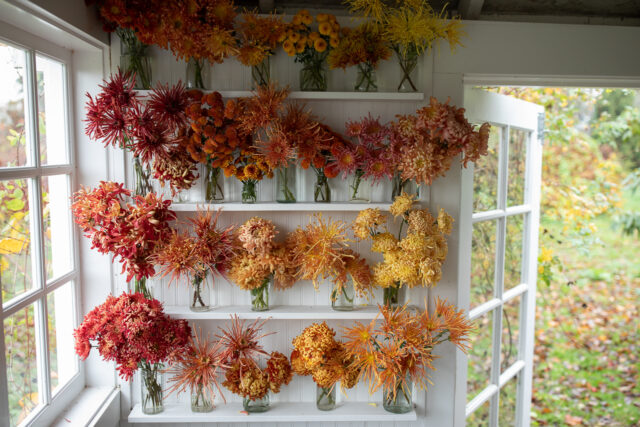
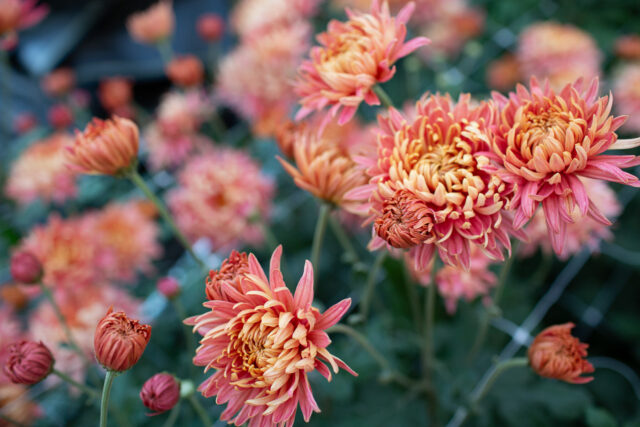
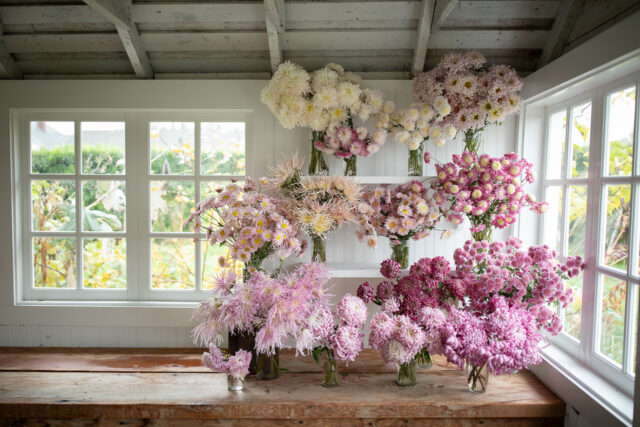 It wasn’t until I discovered a patch of heirloom varieties growing on a friend’s flower farm that I realized that not all mums are the same. The heirloom types come in a diverse range of colors, shapes, sizes, and plant forms, and there are so many beautiful options to choose from. Some varieties have blooms the size of tiny little buttons, while others are as big as grapefruits.
Flowers may open into spidery starbursts or have long, cascading petals that look like the feathers of an exotic bird. The heirloom varieties are not only stunningly beautiful, but also peak at a time of year when most of the garden is going to sleep—I think of them as the last hurrah of the flower season. I’m always looking for new varieties to trial, and you can explore the ones we’ve grown so far in the Floret Library.
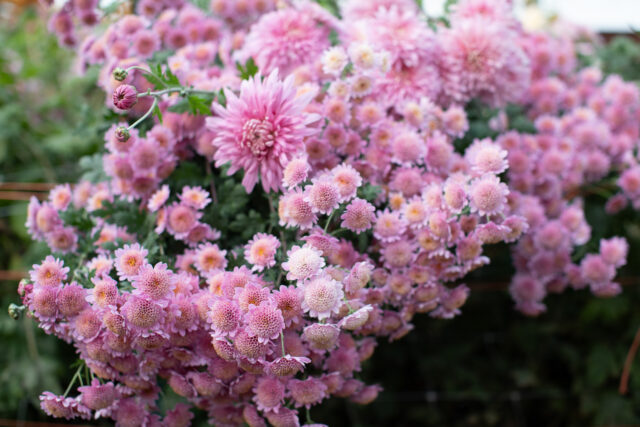 Although chrysanthemums are not cut-and-come-again flowers, they produce an abundance of flowering stems. I typically harvest when the flowers are about one-half to two-thirds of the way open (for spray varieties, harvest when one-quarter of the flowers on a stem are open) and then remove most of the foliage from the stem. Flowers often last more than 2 weeks in the vase.
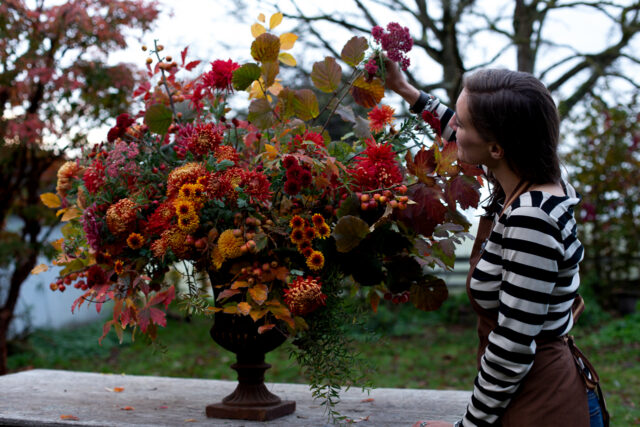 As you can see, there are so many beautiful flowers to choose from! By stocking your garden with a diverse range of flowering plants, you can ensure that you have blooms for many months and extend your harvest season considerably.
If you want to explore even more varieties to add to your garden to create beautiful, natural-looking arrangements, you can learn more about our Flower Arranging Workshop here and sign up for the waitlist below.
Please note: If your comment doesn’t show up right away, sit tight; we have a spam filter that requires us to approve comments before they are published.
Trending Products

Benchmark Bouquets – Flowerin...

Perfectione Roses Preserved Flowers...

Sen Flora Preserved Flowers Bouquet...

CKLMMCZX Preserved Flowers Bouquet ...

KaBloom The Romantic Classic Red Ro...
lovenfold Flowers for Delivery Prim...

Stargazer Barn – Holiday Chee...

Benchmark Bouquets – Signatur...

Bloom’s Diary Preserved Flowe...
