
Fourteen years after the implementation of the U.S.–Colombia Trade Promotion Agreement, the flower industry continues to represent one of the strongest symbols of the close relationship between both countries — generating jobs, strengthening trade and creating shared growth for communities, businesses and consumers in Colombia and the United States.
© Asocolflores
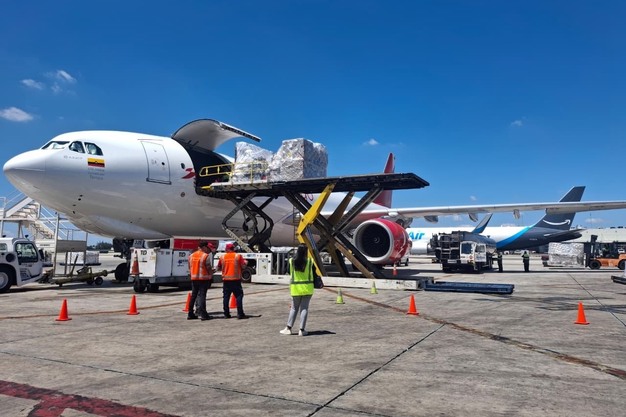
In the early hours of May 15, 2012, a cargo aircraft carrying 4,200 boxes of Flowers of Colombia landed in Miami, becoming the first Colombian product to enter the United States under the U.S.–Colombia Trade Promotion Agreement.
What began with an MD11 cargo flight transporting 80 tons of flowers soon became one of the strongest symbols of the commercial relationship between both countries. Today, Colombian floriculture continues to represent one of the clearest examples of economic integration, trade stability and long-term cooperation between Colombia and the United States.
The path toward the agreement began years earlier. Trade negotiations between Colombia and the United States officially started in 2003 and involved years of technical discussions, collaboration and coordination between governments, private sector representatives and productive industries from both countries.
Throughout the negotiation process, the Colombian flower industry actively supported the discussions alongside the Colombian government while also maintaining a permanent presence in Washington through direct engagement with U.S. policymakers, institutions and strategic advisors. These efforts helped strengthen what eventually became known as the “flower diplomacy” between Colombia and the United States.
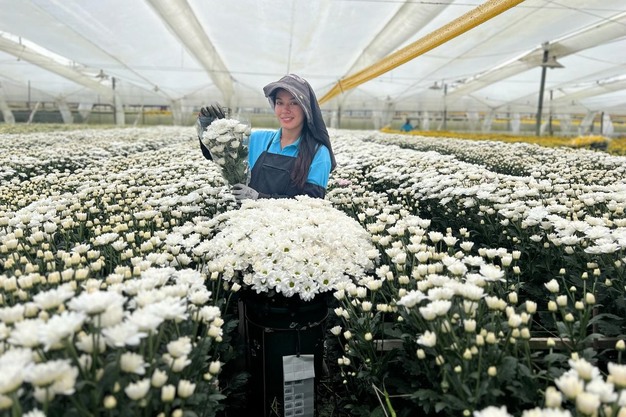
Before the agreement entered into force, Flowers of Colombia already had duty-free access to the U.S. market through ATPA and ATPDEA trade preferences. However, those benefits depended on periodic renewals, creating uncertainty for growers, buyers and investors, especially around key floral seasons such as Valentine’s Day and Mother’s Day.
 © Asocolflores
For the Colombian floriculture industry, the greatest value of the agreement was the stability, confidence and predictability it brought to bilateral trade. The agreement provided long-term certainty, clearer rules and stronger conditions for investment, growth and long-term commercial relationships.
Since the agreement entered into force, Colombian flower exports to the United States have continued to grow steadily, consolidating floriculture as one of Colombia’s leading agricultural export sectors and one of the strongest symbols of bilateral trade between both nations.
Between 2012 and 2025, Colombian flower exports to the United States grew from US$966.7 million to nearly US$1.9 billion, representing an increase of approximately 97% in export value during the first 14 years of the agreement.
In volume terms, exports increased from 149,365 tons in 2012 to 252,816 tons in 2025, reflecting growth of nearly 69%.
Today, the floriculture industry stands as Colombia’s third-largest export sector to the United States after the mining-energy sector and green coffee.
 © Asocolflores
“It is meaningful that Colombian flowers became the first product to enter the United States under the Trade Promotion Agreement in 2012. Fourteen years later, the flower industry remains one of the strongest examples of the positive impact of the U.S.-Colombia trade relationship — supporting hundreds of thousands of jobs across both countries, strengthening supply chains and helping make fresh flowers accessible to millions of American consumers year-round,” says Laura Valdivieso, President of Asocolflores (Association of Colombian Flower Exporters).
Approximately 80% of Colombian flower exports are sent to the United States, while Colombia remains the leading supplier of fresh-cut flowers to the U.S. market, accounting for nearly 59% of total imports.
This commercial relationship also generates significant social and economic impact on both sides of the supply chain. Colombian floriculture creates nearly 240,000 formal direct and indirect jobs in Colombia, while the flower distribution network in the United States supports more than 225,000 jobs across wholesalers, supermarkets, florists and logistics operations.
For decades, flowers have been part of everyday life in the United States, accompanying celebrations such as Valentine’s Day and Mother’s Day in millions of American homes. Behind each bouquet is a binational supply chain built on trust, logistics coordination, sustainability and commercial integration.
“When Colombia and the United States work together, both countries flourish,” Valdivieso concluded.
For more information: Asocolflores
https://asocolflores.org/
Trending Products

Benchmark Bouquets – Flowerin...

Perfectione Roses Preserved Flowers...

Sen Flora Preserved Flowers Bouquet...

CKLMMCZX Preserved Flowers Bouquet ...

KaBloom The Romantic Classic Red Ro...

lovenfold Flowers for Delivery Prim...

Stargazer Barn – Holiday Chee...

Benchmark Bouquets – Signatur...

Bloom’s Diary Preserved Flowe...
