
© J-Tec J-Tec has expanded its monitoring and analytics system for professional horticulture with a new function: the calculation of so-called Heat Stress Degree Days (HSDD). “This allows growers, for the first time, to systematically track how heat stress in greenhouses accumulates over multiple days, well before visible damage such as wilting, flower drop, or leaf scorch occurs”, says Julian Klehenz, CEO of J-Tec.
Heat stress is cumulative, not a single event
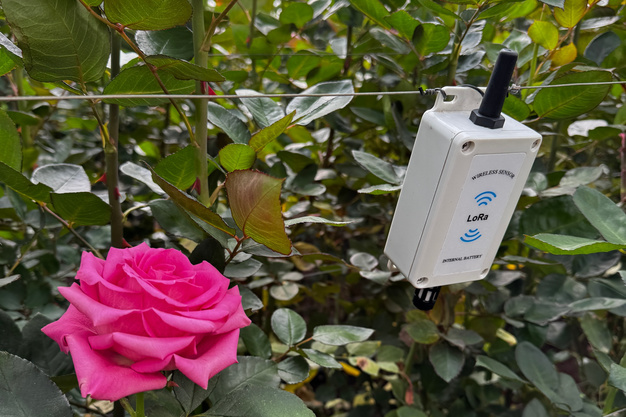
The Austrian company develops monitoring and automation solutions and is active in Europe and Latin America. Based on LoRa sensor technology and the open-source Home Assistant platform, J-Tec provides operations with locally operated, data protection-compliant systems for monitoring climate, soil, and plant health, including integrated analytics for the early detection of fungal diseases and heat stress.
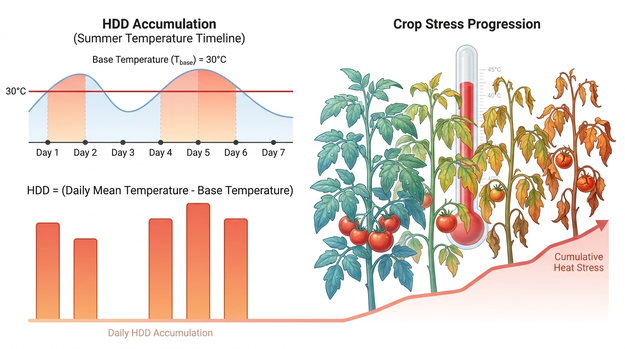
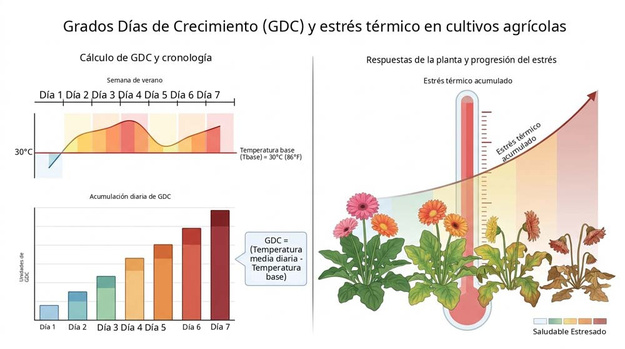
“Summers are getting hotter; dry spells and drought periods are lasting longer. For farmers and greenhouse operators, this is not just a perceived problem; it endangers yields and the health of your plants”, says Julian. “It is not individual hot days that damage a crop, but the sum of many days above a critical threshold.” This is what the HSDD model captures. A base temperature is defined for each crop (around 30°C for heat-sensitive ornamentals, for example), and every degree above that is continuously summed. “The result is a stress value that reflects the actual heat load on the crop.”
 © J-Tec
Early warning instead of reacting to symptoms
The HSDD calculation runs directly within J-Tec’s existing monitoring system, which uses LoRa sensors and a locally operated server. When the value crosses a defined threshold, the system issues a real-time warning or directly controls shading, ventilation, and cooling before the crop shows visible signs of stress. Irrigation is also controlled based on need rather than a fixed schedule, which saves water and protects the crop specifically when required. For cut flower and fruit operations, where heat stress directly affects quality and shelf life, this allows for targeted rather than purely reactive management.
 © J-Tec
 © J-Tec
Part of a growing analytics portfolio
The HSDD function adds to J-Tec’s existing models for early detection of fungal diseases such as botrytis, downy mildew, and powdery mildew. Like the rest of the system, it runs locally, without cloud dependency, recurring fees, or data transfer to third parties.
“At J-Tec, we are convinced that digital solutions will be essential in the future for making agricultural operations climate-fit,” Julian concludes.
For more information:
J-Tec GmbH © J-TecJulian Klehenz
+43 6641484329
[email protected]
www.j-tec.at
Trending Products

Benchmark Bouquets – Flowerin...

Perfectione Roses Preserved Flowers...

Sen Flora Preserved Flowers Bouquet...

CKLMMCZX Preserved Flowers Bouquet ...

KaBloom The Romantic Classic Red Ro...

lovenfold Flowers for Delivery Prim...

Stargazer Barn – Holiday Chee...

Benchmark Bouquets – Signatur...

Bloom’s Diary Preserved Flowe...
