
The Canadian Sphagnum Peat Moss Association (CSPMA) has updated its Science-Based Factsheets, last revised in 2023, to incorporate recent research, industry data, certification requirements and policy context. The revised documents include information from 2021–2025 and a new glossary of key terms.
“The factsheets continue to serve as accessible, evidence-based resources for industry and stakeholders,” says Asha Hingorani, President of the CSPMA. “The updates also provide greater clarity on the role Canadian peat plays within the broader horticultural production system as demand for growing media is expected to increase significantly in the coming decades.”
Among the structural changes, the former Part 4, Alternative Materials and the Wise Use of Peat, has been reframed as The Wise Use of Canadian Peat & Other Growing Media Components. The approach moves away from comparing peat with alternative materials in isolation and instead considers how different components function together in growing media.
© CSPMA
A systems approach to growing media
Asha says the change reflects the practical requirements of growing-media formulation.
“The question is not simply whether peat or another material is ‘better,'” she says. “Growing media are carefully formulated to provide the physical and chemical properties plants need, and different components bring different strengths to the blend.”
Under the revised approach, Canadian peat is considered where its properties contribute to the performance, consistency and reliability of a growing medium. She describes peat as potentially an “enabler,” helping other components perform effectively within a blend.
“For greenhouse growers, this means focusing on the right combination of growing media components for their specific production needs, while also considering the environmental impacts and responsible sourcing of the materials they use.”
A new Appendix A formally defines the CSPMA’s Wise Use of Canadian Peat Principle. In practice, this means using Canadian peat where its properties provide value, using it efficiently, and considering both production performance and environmental responsibility.
Measuring greenhouse gas emissions
The revised GHG factsheet draws on more than 25 years of Canadian research, including chamber measurements, eddy covariance flux towers and long-term modelling centred in part on the Bois-des-Bel peatland in Québec.
According to CSPMA data, horticultural peat extraction represents 1.7% of anthropogenic peatland disturbance in Canada, while its attributed emissions are estimated at 1.6 million tonnes of CO₂ equivalent annually, or approximately 0.2% of Canada’s anthropogenic GHG emissions.
The updated factsheet also addresses end-use accounting. “Current research shows that for horticultural use, only about 5% of the carbon is released initially, with the rate declining over time.” She adds that accurate emission factors are important because peatland emissions feed directly into Canada’s National Inventory Report and support credible reduction targets for industry.
“Precise, science-based emission factors are what let both government reporting and industry set credible reduction targets rather than relying on generic assumptions poorly suited to horticultural peat.”
Veriflora® Version 2.0
The updated Veriflora® Responsibly Managed Peatlands Standard, released in April 2025, introduces revised definitions, scope and requirements for certified peat producers. One of the most substantive changes is the GHG inventory requirement.
Certified producers must establish a baseline inventory covering Scope 1 and Scope 2 emissions, including mechanical sources and emissions associated with peatland use, such as drained extraction areas and restoration sites. The inventory provides the basis for formal reduction targets and timelines.
“The GHG inventory and reduction-target requirement [is] the biggest operational lift in V2.0,” Asha says. Certification also includes requirements covering responsible extraction, restoration, ecosystem monitoring, resource conservation, waste management, labour practices, community benefits, and product quality and claims.
Restoration as long-term research
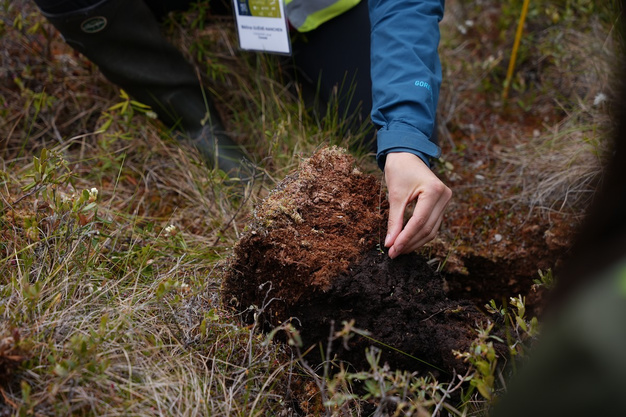
The Bois-des-Bel project illustrates the industry’s long-term approach to restoration research. Following extraction from 1972–1980, eight of 11 extracted hectares were restored in 1999–2000 using the Moss Layer Transfer Technique. The site includes restored areas, an unrestored control and a natural reference area, enabling comparison over more than two decades. “That design says a lot about the industry’s approach: it isn’t restoring and walking away, but building the evidence base to prove restoration works at scale, over the long term.”
Research from Bois-des-Bel has contributed to international understanding of peatland restoration and GHG dynamics. More broadly, CSPMA-supported research has contributed to restoration practices and monitoring across Canada’s peat industry.
For more information:
Canadian Sphagnum Peat Moss Association (CSPMA)
Asha Hingorani, President
[email protected]
https://peatmoss.com
Trending Products

Benchmark Bouquets – Flowerin...

Perfectione Roses Preserved Flowers...

Sen Flora Preserved Flowers Bouquet...

CKLMMCZX Preserved Flowers Bouquet ...

KaBloom The Romantic Classic Red Ro...

lovenfold Flowers for Delivery Prim...

Stargazer Barn – Holiday Chee...

Benchmark Bouquets – Signatur...

Bloom’s Diary Preserved Flowe...
