
I’ve been growing dahlias for nearly 20 years now. In that time, I’ve trialed more than 1,500 unique varieties, and I even wrote a book about them.
Back when we were growing cut flowers, I focused on varieties that held up well during transport and had the longest vase life for customers. For our grocery accounts, we grew primarily ball varieties, and for our florist customers, we offered a handful of dinner plates in pastel tones, a beautiful range of formal decorative types, and tiny pompons for incorporating into hand-tied bouquets.
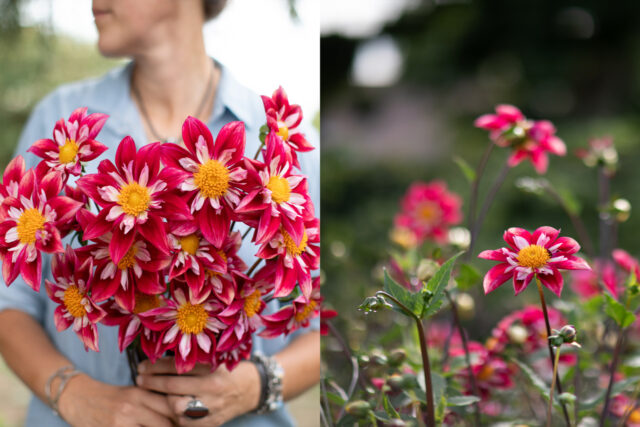
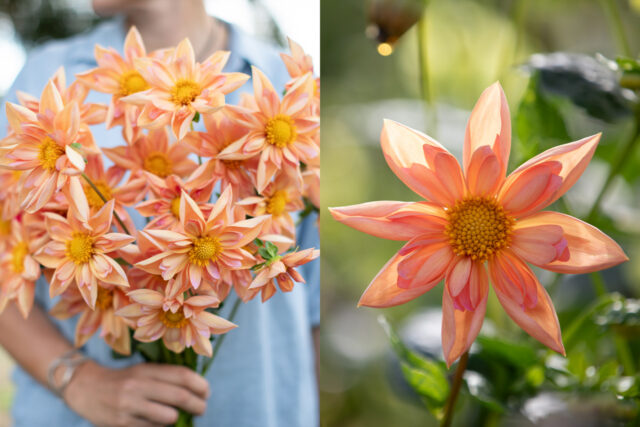
Over time, as the focus of the farm has transitioned from cut flower production to seed growing and flower breeding, I’ve shifted my focus to developing unusual, novelty types and flower forms that have an open center. Some of my favorites are pictured above.
The vast majority of the dahlias that we grow now are part of our breeding program, and a large percentage of those fall into the collarette and anemone classes. These two flower forms have exquisitely beautiful blooms but are notoriously short-lived as cut flowers, so I’ve been focusing my energy on breeding varieties that have an improved vase life.
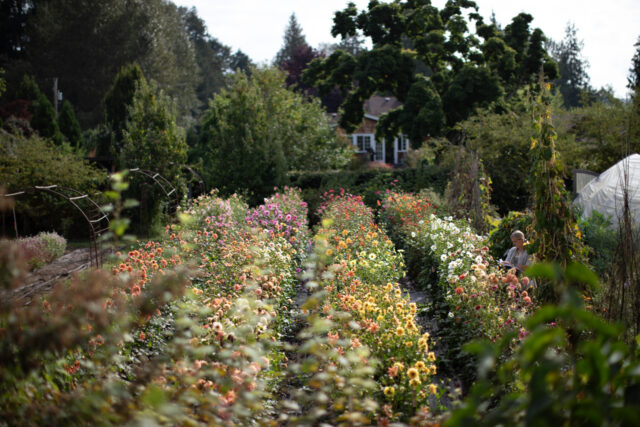
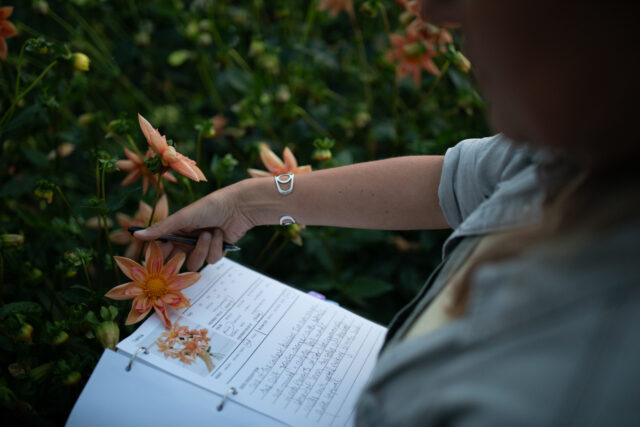 This past season, to see what was on the market, I decided to conduct a huge variety trial of all of the named collarette cultivars that I could get my hands on. I wanted to know whether the varieties I’ve been working on are either an improvement over what already exists or at least as good as the tried-and-true workhorses that we all love.
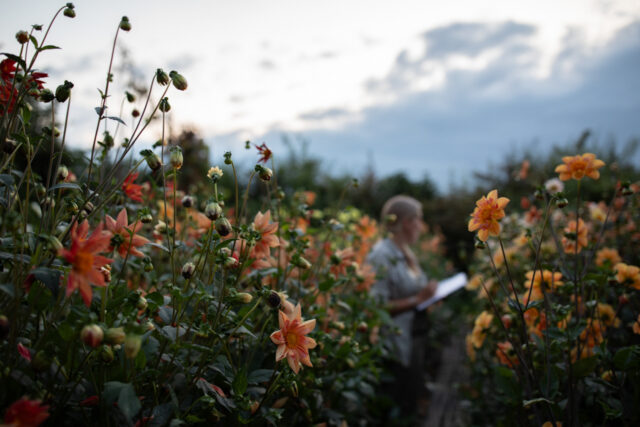
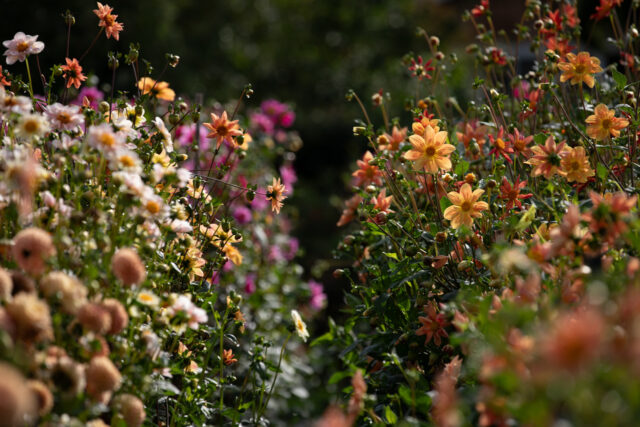 In total, I grew more than 80 named collarette varieties sourced from more than 25 different farms, and I had so much fun getting to see what’s out there.
You can find all of the varieties from this big trial in the Floret Library and below I’ve highlighted my very favorites.
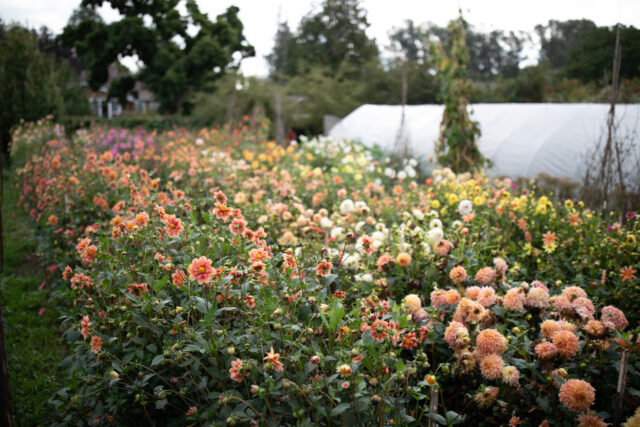 A huge thank you to all of the farms and growers who helped me pull together this incredible selection. And an extra special thank you to Dr. Panat, who called in all kinds of favors to source some really rare, unicorn varieties that took this project to the next level.
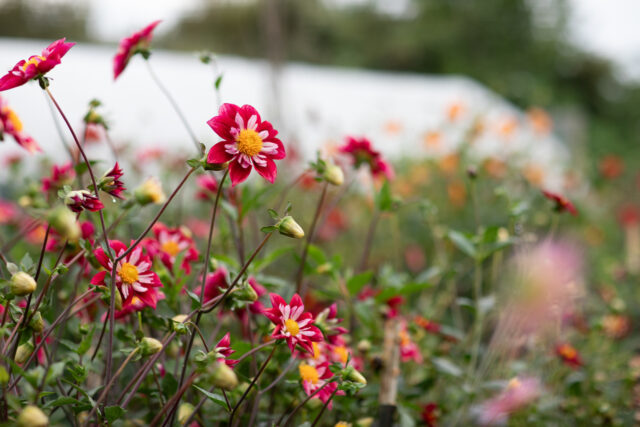 Collarette varieties are defined as having a single bloom form with a collar of ruffled petals, in varying lengths, that encircles their glowing, button centers. Some of the inner petals are short and dense, while others are long and wavy and resemble feathers or ribbons. They have so much personality—it’s almost like their little faces are looking at you in the garden.
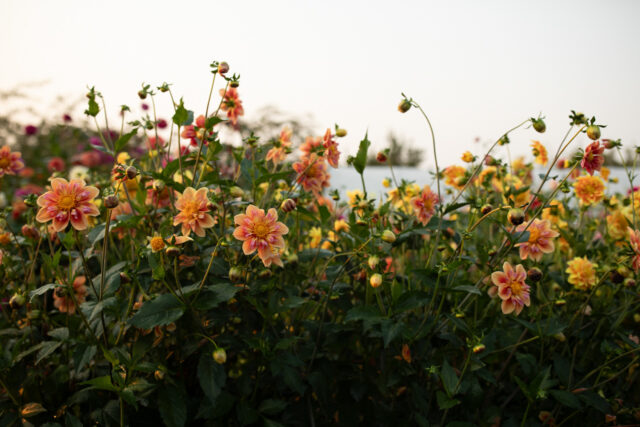 Collarette dahlias have so many qualities that make them special. One is how well behaved the plants are compared to most other types of dahlias: Many collarettes have an airy, branching plant habit, so they don’t require as much staking as varieties with fuller, heavier flower heads.
They are also “self-cleaning”—as their flowers fade, their petals drop to the ground rather than wilting and rotting on the stem, so even if you fall behind on picking or deadheading, the plants always look fresh and tidy.
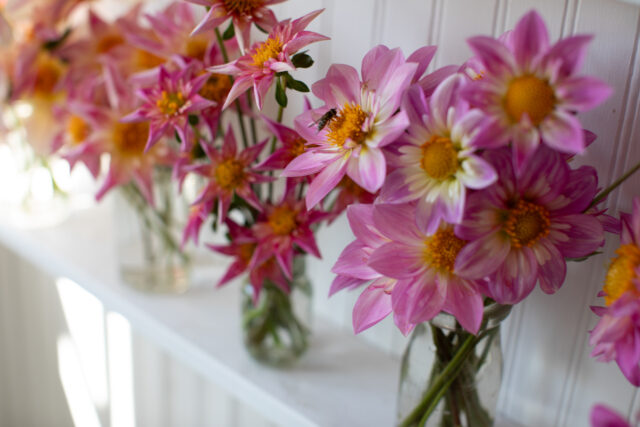
Because of their open centers, most of the blooms have a carefree, wildflower-like quality that I love to incorporate in arrangements. And although many collarettes have a shorter-than-normal vase life, a number of varieties do hold their petals well.
But the very best quality that collarettes possess is that the pollinators really love them, especially the bumblebees. The trial patch was humming with so much life all summer long that you could hear the bees at work from outside the garden.
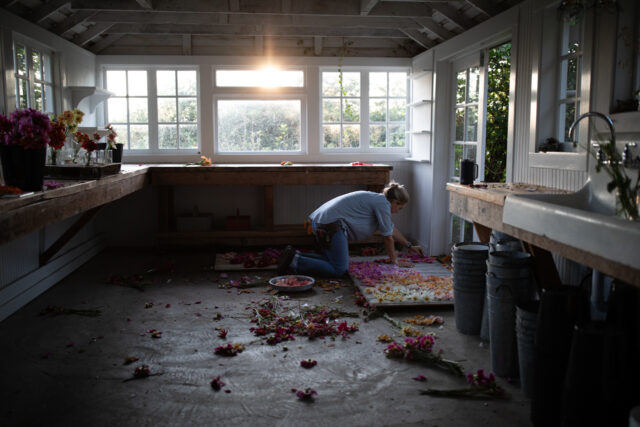
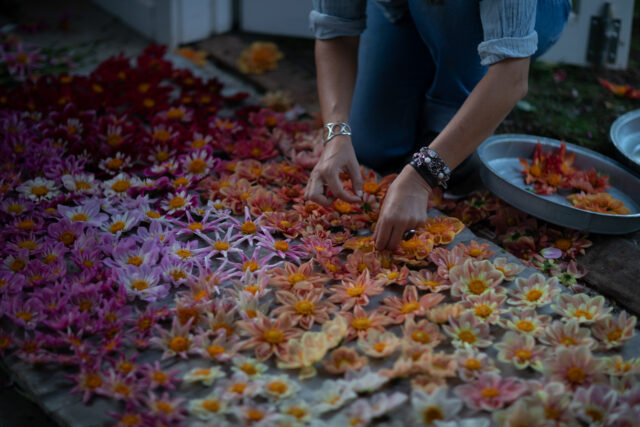
Since I’m so visual, I wanted to compare all of the similar-colored flowers with each other, so after we photographed each one, I cut off all their heads and arranged them side by side.
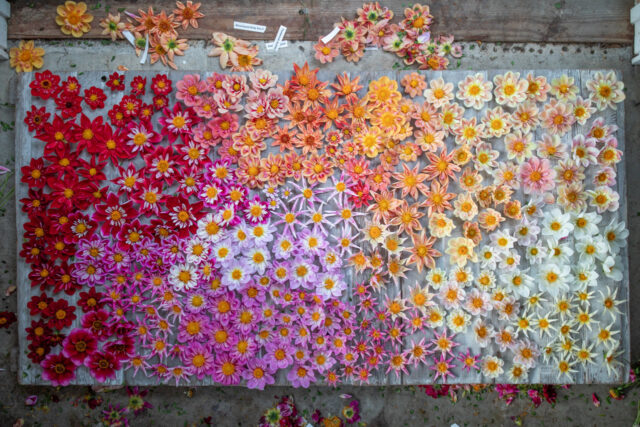 All of the varieties nested pretty neatly into three main color categories: warm coral, orange, and peach; pink, blush, and white; and red, burgundy, and purple.
It was late in the day when we shot the variety overheads and I accidentally mixed up a few of the labels, so ignore the names in the photo and reference the list below each image for accurate identification.
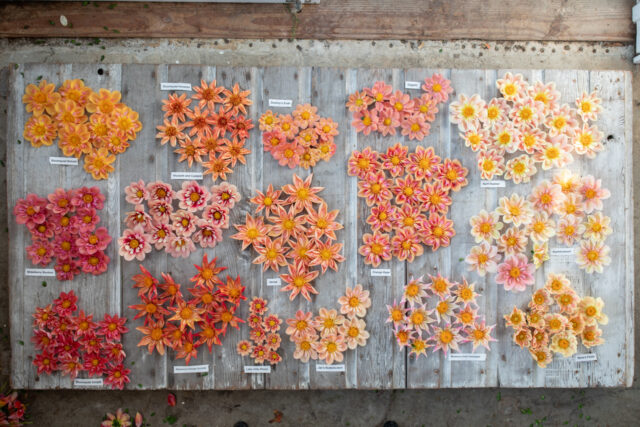 Top row: ‘Bloomquist Behold’, ‘Bloomquist Hummer’, ‘Destiny’s Evah’, ‘GG Petals’, ‘April Heather’
Middle row: ‘Strawberry Bon Bon’, ‘Rhubarb and Custard’, ‘Venus’, ‘Orange Hype’, ‘Appleblossom’
Bottom row: ‘Bloomquist Simple’, ‘Mayberry’s Orange Orchette’, ‘Lake Hills Phred’, ‘Jacs Butterscotch’, ‘Mayberry’s Pink Champagne’, ‘Nana’s Petals’
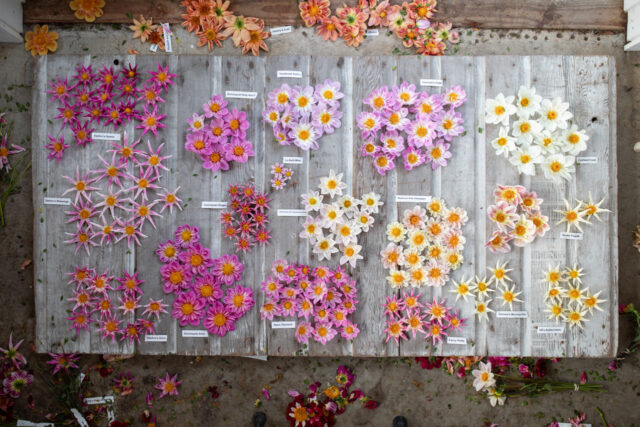 Top row: ‘RaeAnn’s Gemini’, ‘Bloomquist KellyAnn F’, ‘Teesbrooke Audrey’, ‘Carleigh’s Cutie’, ‘Fairfield Frost’
Middle row: ‘Destiny’s Blessings’, ‘Bloomquist Ginger’, ‘Lo-Spilt Wine’, mystery (needs ID), ‘Mayberry’s Peach Blossom’, ‘Ferncliff Dolly’, ‘Honka Fragile’
Bottom row: ‘RaeAnn’s Orion’, ‘Bloomquist Arise’, ‘Alpen Diamond’, ‘Fancy Pants’, ‘Verrone’s Morning Star’, ‘SB’s Buttercream’
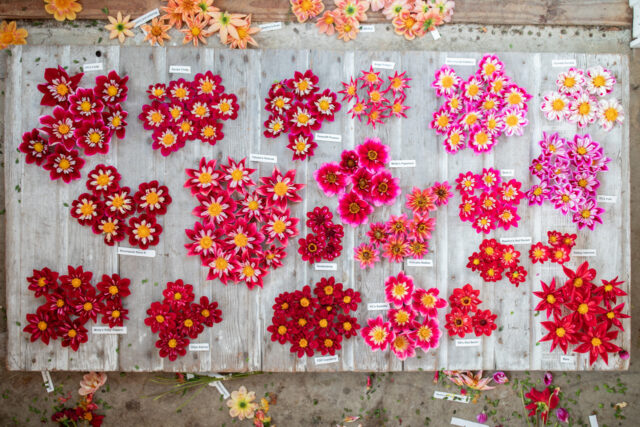 Top row: ‘PC’s Cody’, ‘Apopa Cindy’, ‘Ferncliff Picasso’, ‘SB’s Red Baron’, ‘Bloomquist Catalina’, ‘Bumble Rumble’
Middle row: ‘Bloomquist Steve R’, ‘Thicket’s Rescue’, ‘Hootenanny’, ‘Molly’s Paparazzi’, ‘Princess Nadine’, ‘Sean C’, ‘RaeAnn’s Red Rocket’, ‘Kelsey Valentine’, ‘PC’s Yuth’
Bottom row: ‘Molly’s Ruby Slippers’, ‘Dilys Ayling’, ‘CDP Cranberry’, ‘PC’s Sumetta’, ‘Angel Rowyn’, ‘Mars’
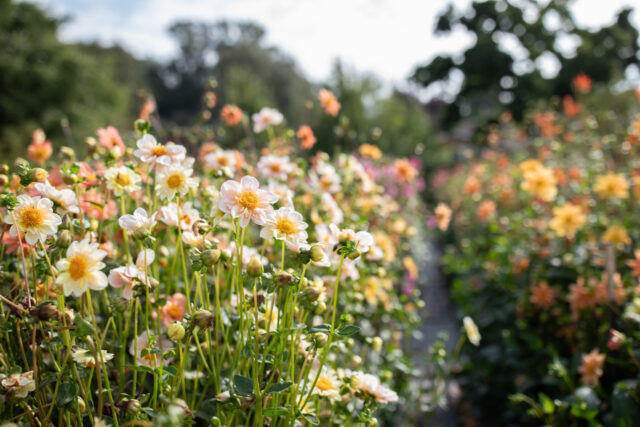 While all of the varieties that I trialed were beautiful, there were a handful of real standouts that made it onto my favorites list and now have a permanent home here on the farm. I thought I’d share my favorite newcomers, along with some of the old faithfuls, in case you’re looking for some exceptional additions to your own garden.
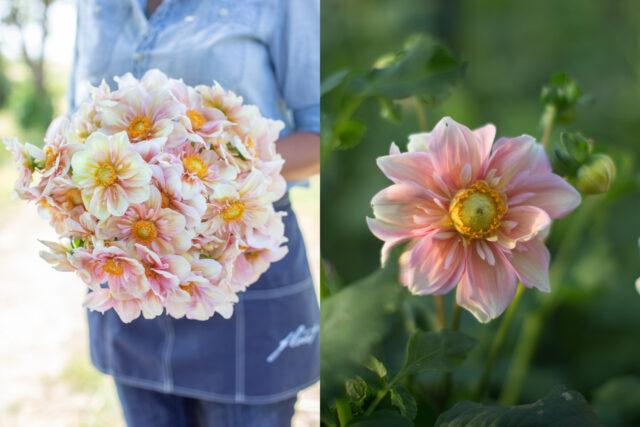 ‘Appleblossom’
The first collarette variety that I ever grew, it was ‘Appleblossom’ that made me fall in love with this beautiful class of dahlias. It was one of the most popular varieties we grew, both for cut flowers and when we sold tubers, and it was impossible to keep it in stock throughout the season. The delicate-looking flowers last surprisingly well in the vase. Petals start out a soft buttercream and take on a subtle blush wash as they age. Bumblebees absolutely love this variety and it has held a top spot here on the farm since the beginning.
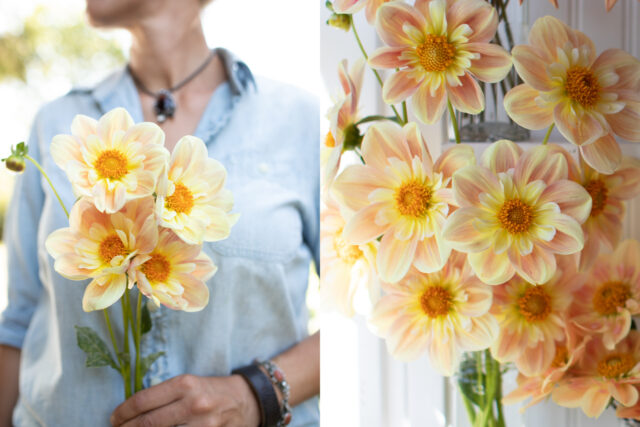 ‘April Heather’
This old standby has long been one of my favorite dahlia varieties. ‘April Heather’ cranks out an abundance of long-stemmed blooms that are the most beautiful peachy golden-buff. Plants have a very airy, branching habit and look wonderful displayed in a mixed border or grown in long, straight rows. Its unusual, neutral-toned coloring can go either pink or beige, depending on the weather. Flowers are very long lasting and fade out as they age.
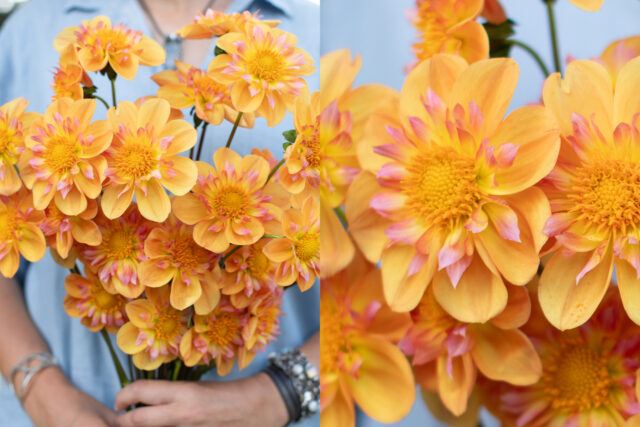 ‘Bloomquist Behold’
This was one of the brightest-colored varieties in the trial, and I was so surprised by how much I loved it. Plants are tall but well behaved, and they produce an abundance of blooms on long, thick chocolate stems all season long. Flowers are a glowing tangerine and have a dense layer of iridescent, pink-tipped twizzles. Blooms last well in the vase, and their fresh, vibrant color is perfect for summer.
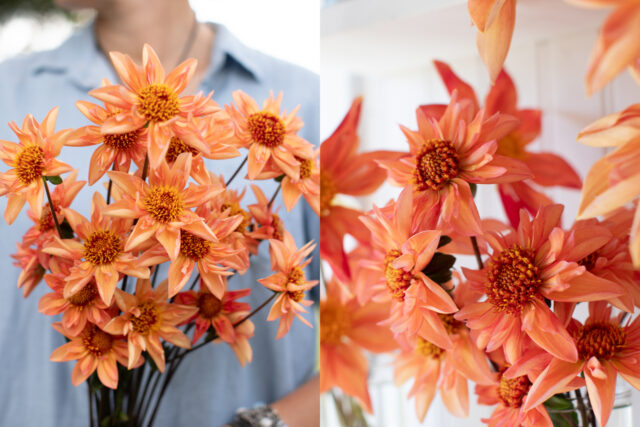 ‘Bloomquist Hummer’
This is an unfortunate name for such a great variety! The towering plants get almost 6 ft tall by late summer and have a sprawling, branching habit. The long, strong, chocolate-colored stems are loaded with the most unusual-looking flowers. Blooms have rich, coral-orange petals that roll inward, giving the tips a pointed appearance. Each flower has a ring of matching orange twizzles that encircle a fuzzy, reddish-brown center. It’s incredibly unique. Although I loved it in the garden, I didn’t cut many flowers this season so I can’t report on the vase life just yet.
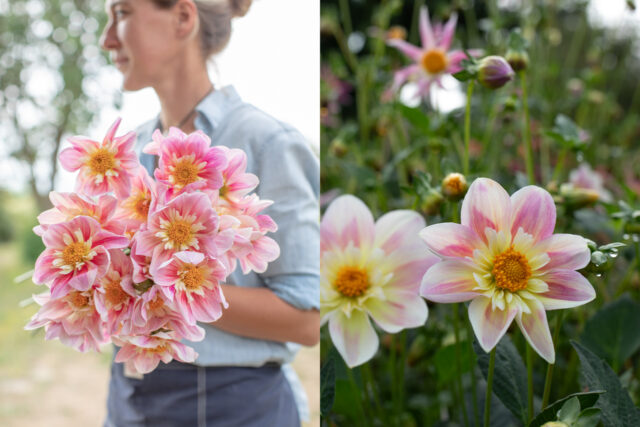 ‘Ferncliff Dolly’
I don’t know if I’ve ever grown a sweeter dahlia. There is just something so special about this beauty, and I can never have enough of her. Plants are well behaved, growing between 4 and 5 ft tall, and have an airy, branching habit. The long, strong stems are topped with large, pretty pink flowers tipped in soft blush. A ring of smaller, creamy inner petals encircles a glowing golden center. In addition to being beautiful, she’s a really long-lasting cut and ages beautifully, both in the vase and in the garden.
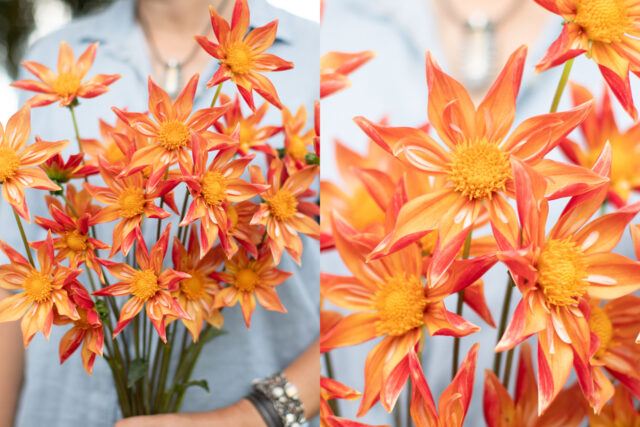 ‘Mayberry’s Orange Orchette’
These absolutely massive plants were over 7 ft tall by the end of the growing season but were surprisingly sturdy for their size. Each long, strong, branching stem holds large, outward-facing, star-shaped coral-orange blooms with rolled petals. Flowers also have long, white, ribbon-like twizzles encircling their button centers. These beautiful monsters last very well in the vase.
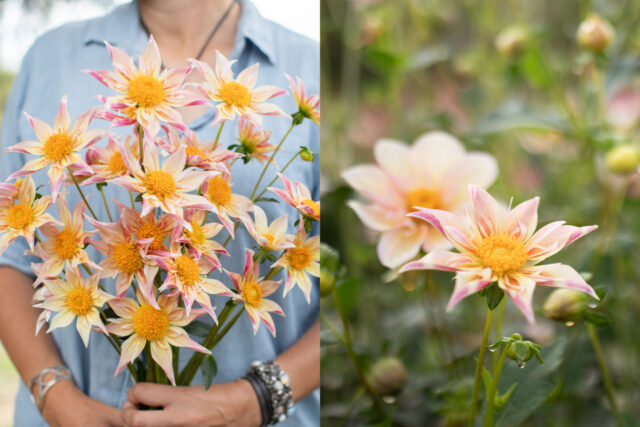 ‘Mayberry’s Pink Champagne’
Another gem from Mayberry’s breeding program, these plants top out at 6 ft and produce a bumper crop of the most beautiful, long-stemmed flowers. Flowers are the prettiest soft buttercream with a rosy haze and pinked petal backs. Their large, upward-facing blooms have rolled, pointed petal tips. A ring of short, white twizzles encircles the dense, fuzzy, yellow centers. They also hold up great in the vase, lasting just over 5 days. A new favorite!
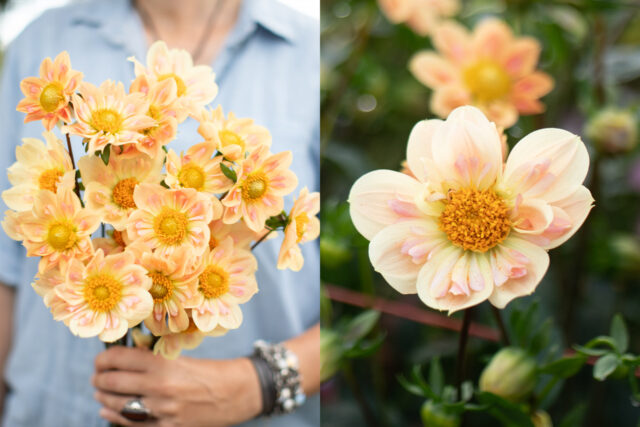 ‘Nana’s Petals’
I hunted for this elusive variety for 3 years before finally snagging it. I had really high hopes for this one—and it surpassed all of them! Plants have rich, dark green foliage and are surprisingly well behaved, topping out at about 4 ft by season’s end. The dense, bushy plants are smothered with the prettiest upward-facing, soft buttercream blooms with a thick peach stripe down the center of each petal. Each flower has a double layer of thick, peach-kissed twizzles encircling a bright orange-yellow center. Although the flowers look quite delicate, they last surprisingly well in the vase. ‘Nana’s Petals’ was worth the wait and is now a top favorite.
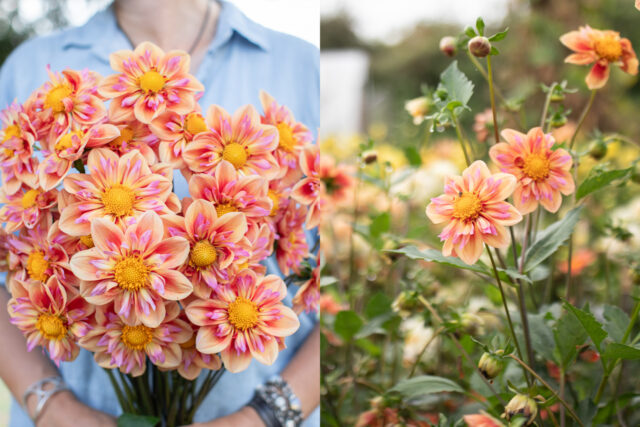 ‘Orange Hype’
I discovered this treasure a few seasons back and it has quickly become a favorite. Plants get quite large, between 5 and 6 ft tall, and are loaded with an endless supply of flowers that ride atop dark chocolate stems. The outer petals are a soft peachy-orange with a reddish base, and a ring of long, wavy twizzles tipped in iridescent lavender surrounds the golden center. The color combination is mesmerizing and it’s hard to believe they’re real. These beautiful blooms also have an excellent vase life and are one of my favorites to arrange with. A must-grow!
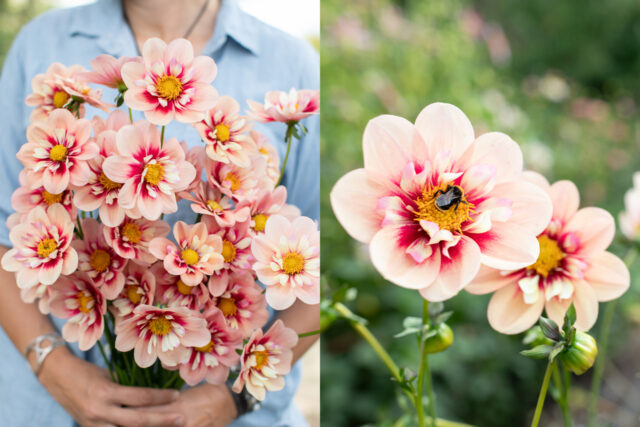 ‘Rhubarb and Custard’
This is one of the most sought-after varieties on the market right now, and for good reason. ‘Rhubarb and Custard’, bred by Dr. Keith Hammett in New Zealand, is one of the most prolific bloomers I’ve ever grown. The well-behaved plants top out at 4 ft tall and put out an endless parade of blooms all season long. Flowers have soft apricot outer petals with a rhubarb-red ring around the center and creamy custard twizzles with lavender tips. The color combination is like nothing else I’ve seen, and they are a flower arranger’s dream. Despite their delicate appearance, blooms are tough and last very well in the vase. It’s also a favorite with pollinators.
 ‘Thicket’s Rescue’
This variety is now in my top 5 favorites of all time. Bred by 10-year-old twins with the help of their mom, I think this gem is going to become the next big thing. You can read about how it was discovered here. The towering, 6-ft-tall plants have dark green foliage and long chocolate stems that are topped with huge, smoky raspberry-red blooms with pointed petal tips that fade as they age. Each flower has a striking ring of white twizzles kissed with cranberry. The flowers are very long lasting when cut and it is a favorite with the pollinators.
 ‘Venus’
It took me years to find this highly coveted variety, and it was such a treat to finally get a chance to grow it. Plants are bushy and lush and get between 4 and 5 ft tall. Soft peachy-orange outer petals are pointed and roll slightly inward, giving flowers a star-like appearance. A ring of long, matching twizzles is tucked inside each petal, giving blooms a unique textural quality. One of the most interesting surprises was that a few yellow sports popped up in the row—they had the exact same plant habit and flower form, but were highlighter yellow. The one downfall of ‘Venus’ is that it doesn’t hold well in the vase, but it’s still one of the coolest dahlias I’ve ever grown.
 For a list of all of the sources that I ordered tubers from for this trial, be sure to read our Recommended Dahlia Sources blog post.
I hope this post has inspired you to consider adding some of these beautiful, pollinator-friendly flowers to your garden. If you know of a collarette variety that I haven’t yet grown, please let me know!
Please note: If your comment doesn’t show up right away, sit tight; we have a spam filter that requires us to approve comments before they are published.
Floret only lists companies and products that we love, use, and recommend. All opinions expressed here are our own and Floret does not offer sponsored content or accept money for editorial reviews. If you buy something using the retail links in this post, Floret may receive a small commission. Thank you for your support!
Trending Products

Benchmark Bouquets – Flowerin...

Perfectione Roses Preserved Flowers...

Sen Flora Preserved Flowers Bouquet...

CKLMMCZX Preserved Flowers Bouquet ...

KaBloom The Romantic Classic Red Ro...
lovenfold Flowers for Delivery Prim...

Stargazer Barn – Holiday Chee...

Benchmark Bouquets – Signatur...

Bloom’s Diary Preserved Flowe...
