
Today, I am excited to share a new interview with Sarah Raven, one of the earliest pioneers of the local flower movement. More than two decades ago, I picked up a copy of Sarah’s Grow Your Own Cut Flowers at my local library, and my life was forever changed. Sarah inspired me to start growing cut flowers in my backyard, and I have been a devoted fan and student ever since.
Sarah is a prolific and gifted writer and has published 14 books on growing and arranging seasonal flowers, container gardening, wildflowers, vegetables, and cooking using garden-grown ingredients. Her newest book, A Year of Cut Flowers: A Life of Growing and Arranging for All Seasons, was just released here in the U.S.
This jam-packed book outlines Sarah’s tried-and-true approach to growing cut flowers, which she has developed and refined over her 30-plus years as a gardener and teacher. In its pages, Sarah shows her readers how to grow flowers from seed for an abundant first-year garden, how to select plants based on their needs, space, and budget, and how to extend their harvest window from early spring all the way through late autumn. She also does a deep dive into all of her favorite varieties by plant group and explores her signature color palettes by season.
But what I love most about this book is its down-to-earth, conversational tone and stunning photography. It provides a warm invitation to simply get into the garden, especially if you’re just starting out. Sarah has an abundance of wisdom to share, and there’s so much to learn from this book no matter where you are on your gardening journey. I hope you enjoy the interview.
 Sarah, thank you so much for taking the time to share about your new book, A Year of Cut Flowers. Along with all of the growing, gardening, and arranging lessons and advice found in its pages, it feels a little more reflective than your other books. Who did you have in mind when you wrote it, and what do you hope they find in this book that they may not find in your earlier works?
It’s more personal—and a kind of call-to-gardening. Gardening has been one of the best and strongest strands in my life, bringing me so much contentment and fulfillment, so I want to convince non-gardeners/beginners that it is one of the easiest and most immediate life enhancers you can find. I hope this latest book is accessible. That was my plan when I wrote it, to assume that readers have no or minimal gardening knowledge but have the book still be readable and understandable for all.
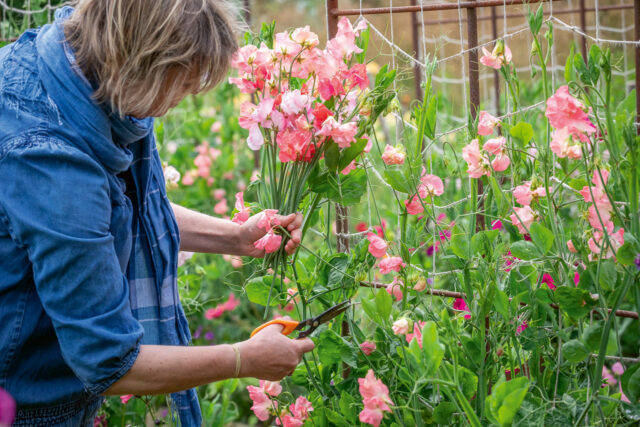
And within gardening, this is a book about the wonders that are cut-and-come-again plants, which if you harvest in the right place and at the right time in their growth curve, they grow back quickly to flower again within a few days. It’s all about axillary buds and how to garden to promote them.
So, it’s a call to action—to have even just one pot on your doorstep or window ledge or a whole plot full of plants that behave in this way. Whether you go for annuals, biennials, dahlias—or all three—it’s a way to garden for those who love the idea of an ever-filling cup, gardening to reinvigorate the optimist and cheer the pessimist. Truly this sort of productive gardening can do that!
I hope there’s stuff that’s interesting to seasoned gardeners too, but my aim is to attract a new bunch of people to the greatness that is growing and producing.
 You are such a prolific and gifted writer—how many books have you penned now? I personally find the process so challenging and very much admire your stamina. How have you managed to bring all of these books to life? Have they come together in similar ways, or does each one have its own unique journey?
Thank you! I’ve written 14 books now (I think) and love writing, probably almost more than anything apart from putting together our collections and doing plant and color combining.
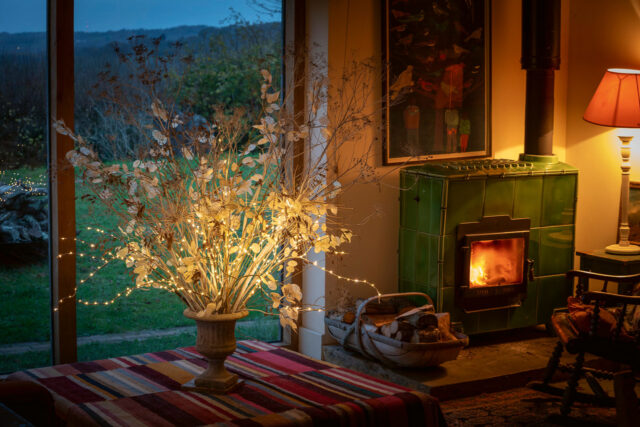
I write in the winter—when the garden is quiet—as well as in the early mornings between 5:30 a.m. and 8-ish through the rest of the year. Then I have a bath and my main job takes over for the rest of the day. And I often write on weekends as it’s my quiet, away-by-myself-time and I value that. Once the days get longer, I’ll alternate early-morning writing with wandering round the garden taking notes and photographs—which all feed into my research for teaching, my next book, and our online plant nursery.
 A Year of Cut Flowers is dedicated to Jonathan Buckley, the amazing photographer you’ve worked with for 30 years. Chris and I are such big fans of his work! We’ve talked about your partnership with him in our past conversations, and I’m curious how that relationship has evolved over the decades. Does he still come to Perch Hill every month during the growing season? Will you take us behind the curtain and talk about how your shoots work?
Jonathan has become a very dear friend. We understand each other perfectly and know how each other works. We work hard but have fun too. And he and my husband Adam are also great mates—they tease each other a lot.
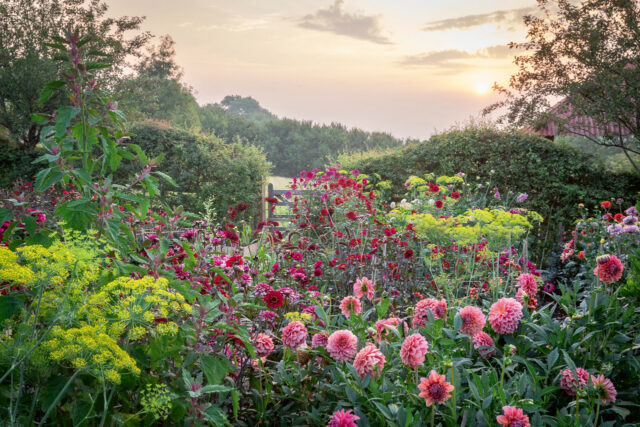
From mid-March to mid-September, Jonathan is here maybe 2 or 3 days every 3 weeks, with the odd visit in between. He arrives at 9:30-ish on the first day of the shoot (because he lives 3½ to 4 hours from Perch Hill). We shoot to a list I make over the previous week or so—on a large sheet of A5 white paper, which we then tick off, slowly but surely.
We’re usually working on a book as well as shots for my online Sarah Raven website. Once the clocks change, we usually shoot till about 6:00 p.m., a mix of garden shots, pots and their combinations, vases, as well as the odd bit of lifestyle.
Jonathan always stays with us and always has—so we get beautiful early-morning and evening light. I cook supper and we chat on into the evening, but both head off to bed early so we can then crack on early the next day. We meet down in the kitchen at 5:30-ish for coffee and a recap on the images from the day before (which Jonathan has uploaded and often edited a bit)—and then we’re off again.
 In the book, you walk through the four distinct color palettes you’ve created over the years. How much of working with color feels instinctive to you versus learned, and has that balance shifted over time? What palettes are you most drawn to right now?
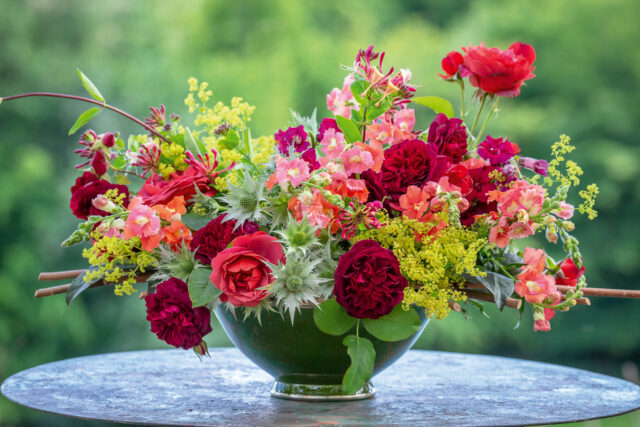
It’s pretty much all instinctive. I’ve been obsessed with color since I was young—but because I teach a lot, I’ve had to analyze why my families of colours work—and why those that don’t don’t!
Jonathan and I have now taken over 60,000 photos together in the garden here over the last 30 years, and looking at those images, over and over, with me analysing why I love or dislike something, has helped refine and educate my tastes and instincts. And I look at Instagram maybe every couple of days—and find certain people like the same kind of things as me but maybe with a slightly different emphasis. That prompts and inspires me too.
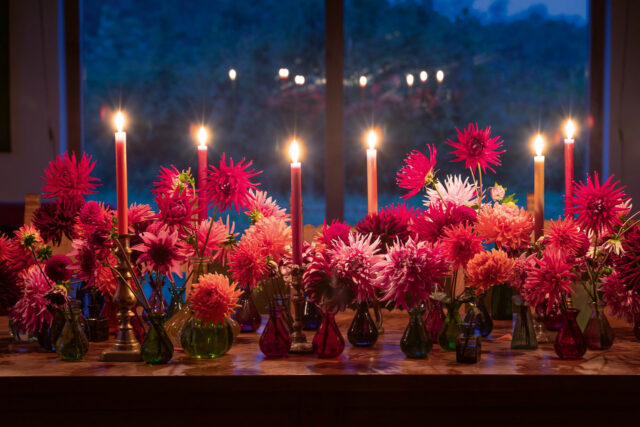 Dahlias are clearly a lifelong obsession. What do you look for on your annual sourcing trip to the Netherlands, and how does that inform your breeding program at Perch Hill? What traits are you selecting for these days?
I go on one 3- to 4-day dahlia trip (at least) a year to Holland with Josie Lewis (head gardener here—who is equally obsessed with dahlias as I am), Tom Stimpson, our online head of horticulture, and Ruth Smith, our main bulb buyer. We usually meet up with friends in the Netherlands—some from there, some from, e.g., the U.S. or U.K. We also do two spring trips and maybe a summer one every year.
There are four main things we’re (currently) looking for in our dahlia selections.
1. Outstanding drama and beauty, unusual colours, curvy petals, etc. ‘Labyrinth’ is a kind of model for us. It is perfectly beautiful.
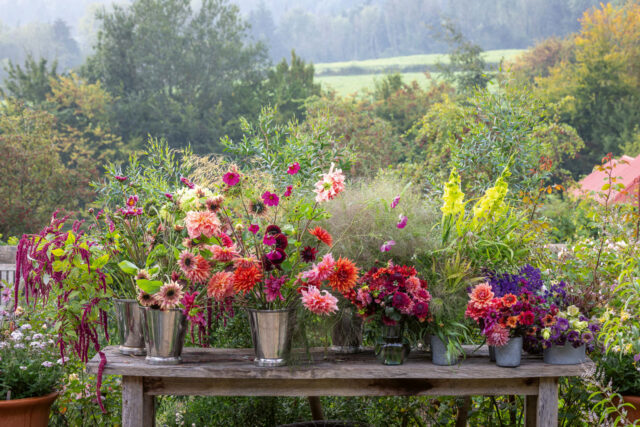
2. Outstanding vase life—which is unusual with classic dahlias. Many only last 4 days, but we’re looking for 7 days ideally and have found/bred quite a few now with this extended water life. Our new one, ‘Sissinghurst’, which we named after the famous garden Adam’s grandparents created—because it reminded us of the whole place—has a vase life of 7 days plus.
3. Compact enough for a pot BUT still graceful and not dumpy. I don’t like dahlias that are too short and too covered with heavy flowers, so they end up looking like a Shetland pony who’s won all the rosettes at a gymkhana.
BUT they can’t be towering giants either if they’re going to work well and grow easily in a pot, so we’re looking for things below sort of 90cm but more than 45cm which have a grace and dignity about them.
4. Open, single, or semi-double flowers are brilliant for pollinators—and that’s super important to us, not for every single dahlia we grow but for a large percentage. And these often are heavy seed bearers too—so good for attracting and holding onto garden birds. The birds then eat our slugs, so we help nature, which then helps us as gardeners. You create a virtuous circle. It’s a win-win.
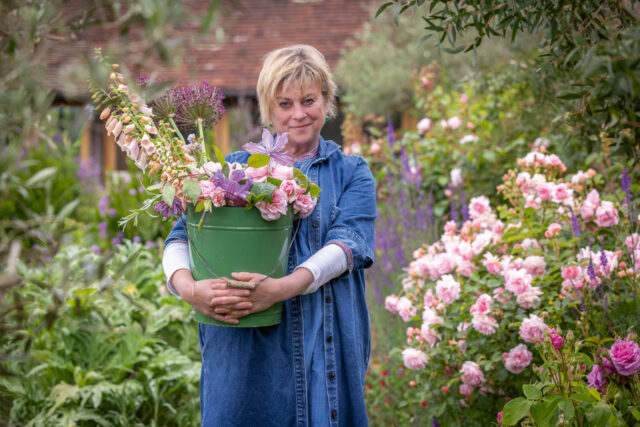 Travel seems to play an important role in your life. What adventures have you been on lately, and how do you squeeze that in, given everything you have on your plate? What do you bring back from your travels, both personally and creatively?
Travel is hugely important to me for many reasons. One is I need to get away. I have quite a lot of responsibilities here and need breaks to keep my enthusiasm going.
I also find being away is the time for my best and most creative thoughts/ideas. And it’s when I do lots of my writing. But also, I get inspiration for new patterns, mixes of shapes, colour combinations, etc. etc. And I love nature—botanising or spending time in a boat off the west coast of Scotland, just hanging out or maybe fishing for supper.
My latest trip was to Marrakech and the Yves Saint Laurent garden and museum. I met an amazing chef while I was there—and visited her incredible herb farm. And the best stalls in the spice part of the souk.
 Your husband Adam Nicolson recently wrote a book called Bird School, for which he built and spent time in a “man-sized birdhouse” at Perch Hill in order to better observe small birds. Did living alongside that period of research change the way you think about your garden and its relationship to birds? What surprised you most?
Yes, absolutely. We were on the way in that process before he started the book—and it was partly what drove him to then go on to do the deep research and live with the birds and observe them so closely for 2 to 3 years.
We had all noticed how much easier gardening was since the gradual return of active nature here over the last 32 years. We are organic, and by adding in other layers of things to nurture nature, e.g., properly concentrating on growing more plants that feed the birds, even right through the winter (which crabapples hold their fruit the longest, which roses their hips till February? N.B.—myrtle still has berries for birds to feed on here in April), the dawn chorus here is soooo loud in April—that’s deeply and utterly confirming that we’re doing something right.
And the birds eat the slugs and snails just when we want them to in mid-spring. In the very wet spring we had here in 2024 and the slug explosion which went with that, many people struggled growing dahlias. We didn’t, and that made us pretty sure it was almost certainly our large small-bird population which was responsible.
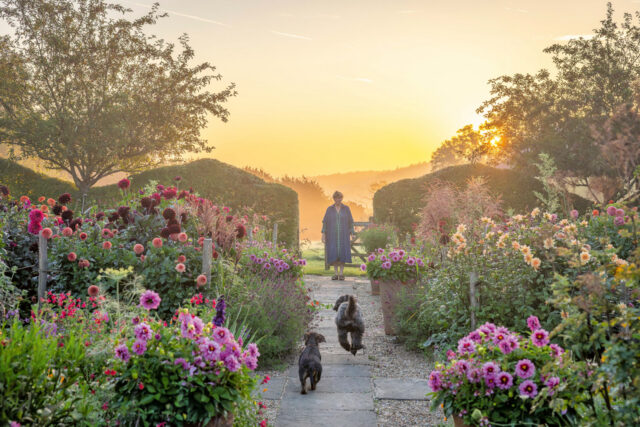
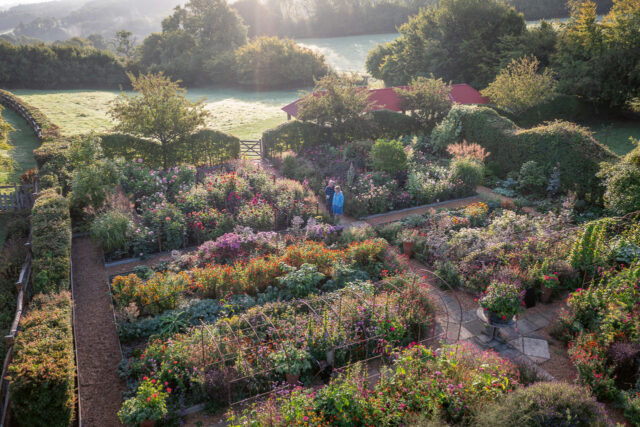
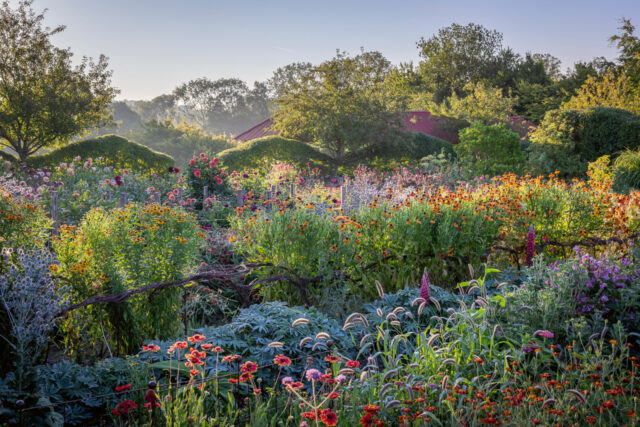 Perch Hill is such a magical place, both practical and breathtaking. It really was one of the most beautiful gardens we visited in England. What’s your favorite place on the property right now? Are you trialing anything this season that you’re particularly excited about?
Thank you again. East Sussex is a beautiful part of the country and this is a beautiful part of East Sussex, with gentle rolling hills and heavily wooded with oak, hazel, ash, and willow woods.
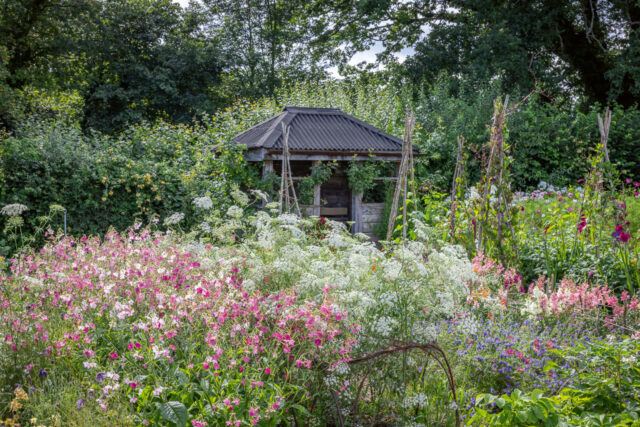
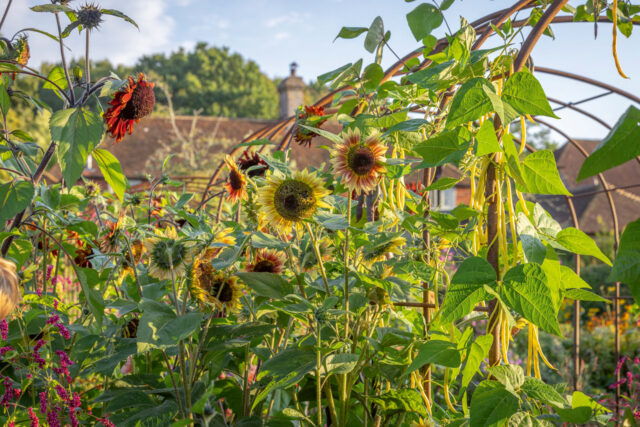
A favorite place on the property is so difficult to choose and also changes through the seasons. In spring, I love the grass, lawns, and meadows with mini bulbs (iris reticulatas, snowdrops, and narcissi), moving to the Oast garden with all its tulips later in spring, and then probably the growing greenhouse with all our tomatoes, finishing with the Dutch Yard crammed with pots so you almost have to fight your way through by September. And always, always the cutting gardens to see what’s opened the day before.
Trials—yes, we always have several. Tulips that you can plant super late and are still happy, new sweet peas, new hybrids of alstroemeria (I love trialling and championing an unfashionable flower), scented-leaf pelargoniums, mints for vase foliage . . . and of course all our own dahlias.
 On the flip side of that, you’ve been tending this same land for three decades. What keeps it feeling fresh? Are there any challenges you’re facing now that you didn’t anticipate when you started?
The trialling is what keeps it fresh for me—always learning and experimenting with new plants and new techniques/tools, etc. We really know what works here, but if something new comes along that makes something quicker or easier to grow, we grab it!
I do think stronger, more extreme weather is on the up—more winds and crazy, out-of-season storms. That seems to be affecting trees more than anything right now, but it’s a challenge.
 You’re a brilliant teacher, and I know that’s something you’ve genuinely enjoyed doing. How has the type of people you’re teaching changed over the years? What are gardeners struggling with or curious about now that they weren’t before?
I love teaching—but find it pretty tiring now, concentrating on a group on my own for hours at a stretch. I take my hat off to schoolteachers with a group of (sometimes noisy) kids or teenagers day after day! My groups are very well-behaved, but even so, it’s exhausting.
I think, interestingly, my group’s age has gotten younger in the last few years—which is so encouraging. Maybe since Covid, more and more people have realized gardening is one of the best possible things to do in one’s free time, MUCH better than going to the gym. It’s creative, physical, mindful, companionable (or solitary—whichever you prefer), and deeply satisfying—so good for oneself and of course the planet. I think the young are looking for that.
 You’ve been such a significant force in shaping gardening culture over the past 30 years. What shifts in the industry are you most proud to have been a part of, and is there anything you still hope will change?
I think getting everyone to grow a little of their own—whether a bunch of flowers a week or a handful of parsley or basil, a few tomatoes or mini, crudite-sized cucumbers, and tasty salads with five or six different tasting leaves in every bowl. That’s the loveliest and easiest thing which makes every life better and truly only needs a balcony.
I do struggle with the use of chemicals in the garden to, e.g., kill insects or weeds. You walk into any garden center here and these chemicals still fill the shelves, yet they just are not necessary. I think those who use them just don’t realize what’s truly happening for the whole environment, not just right there, but as far as an insect can fly, etc., etc. That upsets me, but I try not to preach, but show. People who come here can’t believe the volume and variety of bird and insect life and the beauty and sounds and movement that give a fully living, healthy ecosystem.
 I find with gardening, and in life, there’s this feeling of never quite arriving—always wanting to learn more, to grow more, to keep moving forward. Do you still feel that after all this time, or does that show up differently? What’s lighting you up these days?
I know just what you mean, but I don’t feel that right now. I had a difficult year last year, and funnily enough—as a result I think it’s given me more perspective on what I’ve done and . . . that that’s quite a lot and it’s all ok to not want to do so much more. I don’t think I’ll ever retire entirely (I feel my brain would starve without the inspiration), but I’m hugely enjoying teaching colleagues all I know and being able to sit back and not rush around quite so much and watch them a bit more!
BUT then I am quite a bit older than you—I’ve just been 63. I love my work but seem to be getting the work/life balance a little better now. Also, I’m now a grandmother—and that’s the most amazing thing which I truly love, connecting and reconnecting with what’s important.
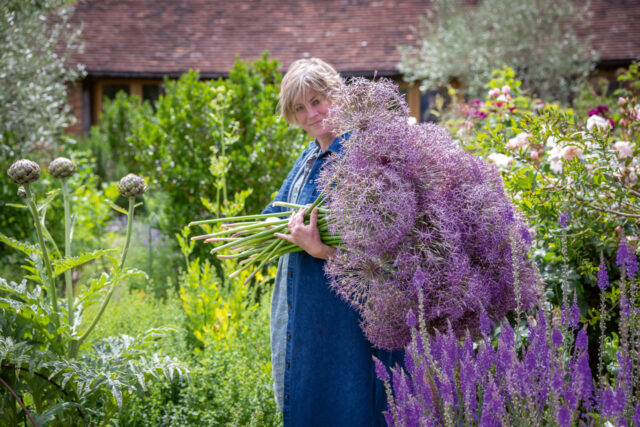 Sarah, thank you so much for taking the time to share all about your beautiful new book. I’m so happy it’s finally out in the world and know it will be the source of so much inspiration for both seasoned and new flower growers alike.
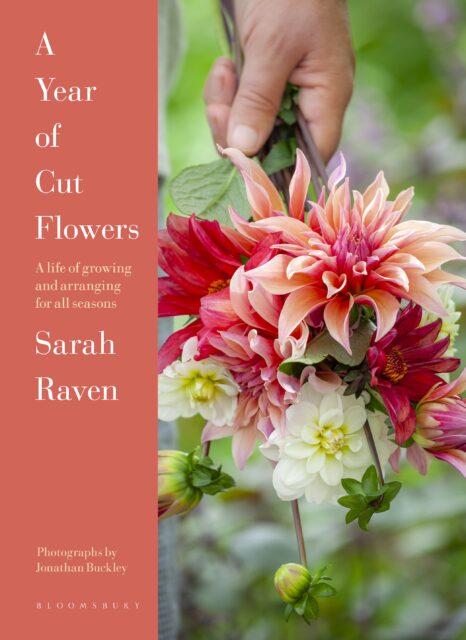 To celebrate the release of Sarah’s new book, A Year of Cut Flowers: A Life of Growing and Arranging for All Seasons, we’re giving away five copies. For a chance to win, simply post a comment below telling us what cut flower variety you’re most excited about growing this season. Winners will be announced on April 14. Please note: This giveaway is open to U.S. and Canadian residents only.
To learn more and connect with Sarah, be sure to visit her website and follow her on Instagram and Facebook. A Year of Cut Flowers is available from Amazon, Bookshop, and your favorite local bookstore.
All photos included in this blog post are copyrighted by Jonathan Buckley.
I first interviewed Sarah for our “Farmer & The Florist” series back in 2016 and again in 2021. If you’d like to read those posts, they are linked here and here.
Please note: If your comment doesn’t show up right away, sit tight; we have a spam filter that requires us to approve comments before they are published.
Floret only lists companies and products that we love, use, and recommend. All opinions expressed here are our own and Floret does not offer sponsored content or accept money for editorial reviews. If you buy something using the retail links in this post, Floret may receive a small commission. Thank you for your support!
Trending Products

Benchmark Bouquets – Flowerin...

Perfectione Roses Preserved Flowers...

Sen Flora Preserved Flowers Bouquet...

CKLMMCZX Preserved Flowers Bouquet ...

KaBloom The Romantic Classic Red Ro...
lovenfold Flowers for Delivery Prim...

Stargazer Barn – Holiday Chee...

Benchmark Bouquets – Signatur...

Bloom’s Diary Preserved Flowe...
