
The horticultural sector is experiencing an unprecedented expansion in the availability of technology. Sensors, monitoring systems, software platforms, automation and artificial intelligence are becoming increasingly accessible to growers. At the same time, greenhouse operations are becoming more complex, with increasing pressure to produce more efficiently as labour becomes scarcer and more expensive and market demands change.
But more technology does not automatically mean a better greenhouse.
For Bram Stroot, CEO of AG Strategy, the real challenge for an intensive greenhouse operation is to identify which technology can solve a specific problem, improve an existing process or provide a measurable economic benefit. The criteria for choosing a particular technology are often not very clear to the grower.
“The question should therefore not be ‘What technology can we install?’, but ‘Which technology will help us achieve our priorities?'”, he says.
© AG Strategy
Start with the operation, not with the technology
“I believe one of the first mistakes many growers make is starting with the technology itself. A supplier presents a sensor, an AI platform or an automation solution, and the grower then tries to find a use for it.”
According to Stroot, the process should work the other way around. “The first question should be: ‘What is currently limiting the performance or profitability of the operation?'”
If water availability is the priority, accurate irrigation and drainage monitoring may provide a better return. If climate variability is limiting production, climate sensors and improved control strategies may be more appropriate.
“Technology can easily make a greenhouse more complicated rather than less. I have always believed that good technology should ultimately simplify greenhouse management, even if the technology behind it is sophisticated.”
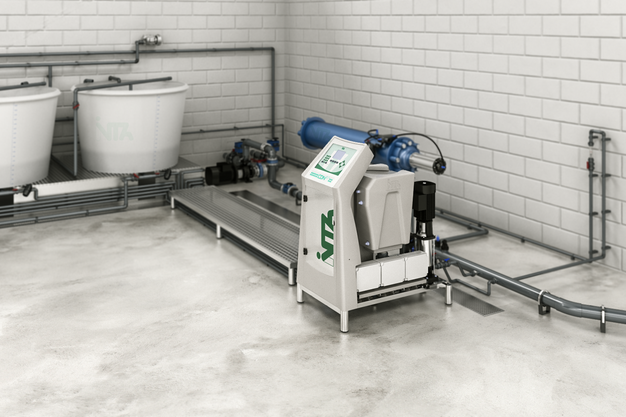
This is one of the aspects Stroot particularly appreciates in his work with INTA, whose approach, he explains, is not simply to add more equipment, sensors and screens to a greenhouse, but to integrate different functions so that managing the entire operation becomes easier for the grower.
“The goal is to make the system simple and user-friendly, while maintaining a balanced cost and adapting the solution to the specific requirements of each client.”
 © AG Strategy
Artificial intelligence needs the right foundations
AI is attracting enormous attention in horticulture, and for good reason. There is significant potential in using large quantities of data to identify patterns, predict crop behaviour and support or automate decisions.
“However, AI is not a magic layer that can simply be added to any greenhouse. Before an AI-based system can provide meaningful value, there needs to be a foundation of reliable and sufficiently consistent data.”
Sensors need to measure the right parameters accurately, be properly positioned and collect data continuously in a usable format. There also needs to be a clear relationship between the data collected and the decisions the system is expected to support.
“For example, we can measure temperature, humidity, radiation and irrigation volumes and obtain a great deal of information, but if the grower does not understand what those data mean, or if the system cannot translate them into useful action, adding another dashboard may simply create more work.”
For Stroot, a useful system should go beyond explaining what has already happened. “Ideally, it should help the grower answer what is happening, why it is happening and what action should be taken.”
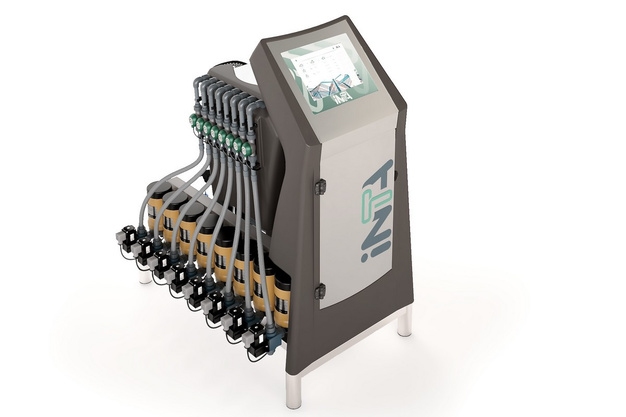
AI therefore makes most sense when it is built on a solid foundation of sensors, reliable data, appropriate control systems and sound agronomic knowledge. At the same time, Stroot points out that implementing AI can require specialised technicians and additional training.
“AI can also create greater dependence on external consultants and add training, time and financial costs. All of that needs to be considered when evaluating the real return on a solution.”
 © AG Strategy
Integration should be considered from the beginning
Another challenge identified by AG Strategy is the growing number of separate technologies being installed in modern greenhouses. A grower may have one system for climate control, another for irrigation, different sensors for crop monitoring, a separate energy management platform and another application for data analysis.
“Each individual system may work perfectly well on its own. The problem arises when they cannot communicate with each other.”
In an intensive greenhouse, climate and irrigation are not independent processes. Temperature, radiation and humidity influence crop transpiration and therefore irrigation requirements. Similarly, irrigation and crop activity influence humidity and the greenhouse climate.
“For this reason, interoperability should be considered at the beginning of an investment, not as an afterthought. A grower should ask what information a system can receive and provide, which communication protocols it supports and whether it can integrate with equipment already installed in the greenhouse.”
Stroot acknowledges that there is a balance between remaining independent from a particular supplier and benefiting from a properly integrated system, and again points to INTA as an interesting example of this approach.
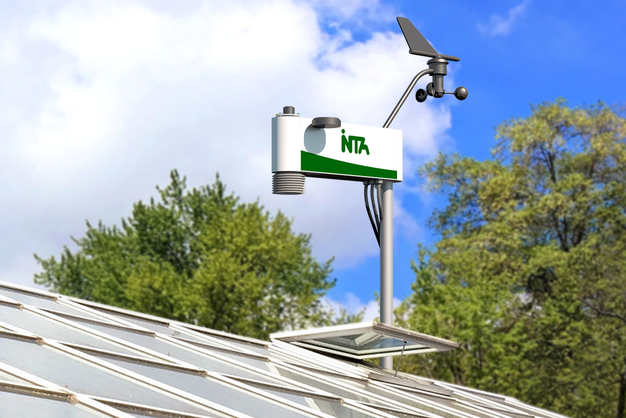
“One of the aspects I particularly value is the emphasis on integrating fertigation and climate management rather than treating them as separate technologies. The objective is not to have more systems, but to have fewer systems that can do more together.”
For him, integration should ultimately simplify management while allowing the system to be adapted to the producer’s specific requirements. Future flexibility is nevertheless important.
“A good investment should leave room to add sensors, equipment or new functionality later without having to replace the entire system.”
 © AG Strategy
How do you know whether the investment was worthwhile?
The final and perhaps most important question is how to measure the result.
“A technology investment should not be evaluated simply by asking whether the equipment works. It should be evaluated by asking whether the greenhouse operation has improved sufficiently to justify the investment.”
The relevant indicators depend on the original priority. If the objective was to reduce labour, measure hours saved. If water efficiency was the priority, measure water consumption per kilogram of product. If the objective was to increase production, compare yield per square metre. If quality was the issue, monitor first-grade product or rejected production.
Other useful indicators can include:
- Fertilizer consumption per kg
- Energy consumption per kg
- Number and duration of operational problems
- Time required for monitoring and decision-making
However, Stroot points to another indicator that is often overlooked: whether the technology has actually made the operation easier to manage.
“A system that saves 5% of water but requires the grower to spend significantly more time interpreting data may not be the best solution. Conversely, a system that integrates several previously separate processes and gives the grower better control with less manual intervention can create considerable value, even if that benefit cannot be captured by a single KPI.”
Technology should simplify greenhouse management
“Ultimately, I believe the best technology investment is not necessarily the most advanced one. It is the one that addresses the most important need of the operation, provides reliable information, integrates with the rest of the greenhouse and produces a measurable improvement.”
The intensive greenhouse of the future will undoubtedly contain more sensors, more automation and more intelligent software. For Stroot, however, this development should not mean that growers have to manage an ever-increasing number of individual systems.
“The direction should be the opposite: increasing technological sophistication combined with decreasing operational complexity.”
“For me, that is one of the most important principles when evaluating technology for greenhouse horticulture. The objective is not to build the most technologically advanced greenhouse possible, but to build the most effective greenhouse for that particular grower, crop and business model.”
And sometimes, he concludes, the smartest investment may not involve adding another technology at all.
“Sometimes we don’t need to add another technology, but to find a way for the technologies we already have to work better together.”
For more information:
AG Strategy
Alicante, Spain
T. +34 618 401 843
[email protected]
https://www.agstrategy.eu/
Trending Products

Benchmark Bouquets – Flowerin...

Perfectione Roses Preserved Flowers...

Sen Flora Preserved Flowers Bouquet...

CKLMMCZX Preserved Flowers Bouquet ...

KaBloom The Romantic Classic Red Ro...

lovenfold Flowers for Delivery Prim...

Stargazer Barn – Holiday Chee...

Benchmark Bouquets – Signatur...

Bloom’s Diary Preserved Flowe...
