
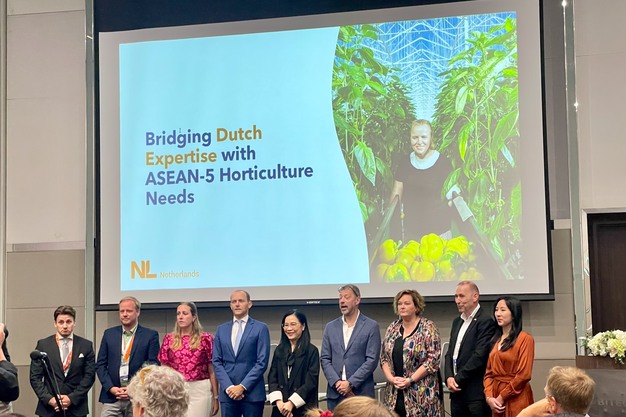
On the final day of Agritechnica & Hortex 2026, the theme “Bridging Dutch Expertise with ASEAN Horticulture Needs” framed a wide‑ranging discussion on how the Netherlands can support ASEAN‑5 countries Indonesia, Thailand, Malaysia, Singapore, and Vietnam as they transition toward more sustainable, resilient, and productive horticulture.
© Alysha Fernandes | FloralDaily.com
ASEAN‑5 as a priority market for Dutch horticulture
Opening remarks by Agricultural Counsellors from the Embassy of the Kingdom of the Netherlands, including Ingrid Korving (Vietnam), Joost Van Uum (Indonesia, Malaysia, and Singapore), and Gijs Theunissen (Thailand), highlighted the intent to bring together policymakers, growers, entrepreneurs, and technical experts from ASEAN, a region representing over 500 million consumers. While these countries differ greatly in culture, religion, politics, economy, and market dynamics, they share a common need: building trust and personal contact. That is precisely why the Dutch Ministry of Agriculture, Fisheries, Food Security and Nature launched the ASEAN‑5 Sustainable Horticulture Trade Mission, to initiate first contact with Dutch expertise, after which relationships can develop based on mutual interests, leveraging existing and ongoing EU–ASEAN Free Trade Agreements.
 © Alysha Fernandes | FloralDaily.com
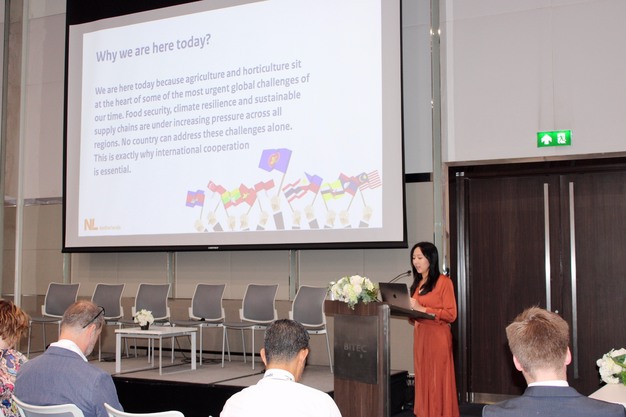
Joost van Ettro, Deputy Head of Mission at the Dutch Embassy, stressed that agricultural productivity, food security, and climate resilience are the region’s current priorities, calling for greater public–private cooperation. The question from the value chain is no longer “how do we grow more?” but “how do we grow better?” given climate change, drought, unpredictable weather, new diseases and pests, and the need to reduce waste and pollution. “In this context, Dutch expertise in horticulture, water management, greenhouses, and artificial farming intelligence can step in,” he said.
 © Alysha Fernandes | FloralDaily.com
Laisy Deng, Business Development Coordinator for South East Asia and Oceania at the Netherlands Enterprise Agency, noted that the Netherlands is already the largest European investor in ASEAN; Vietnam, Malaysia, Singapore, Indonesia and Thailand account for 90% of trade, valuing €164.5 billion in imports and €94.3 billion in exports with the EU. “Agriculture connects us,” she said, pointing to strong complementarity between Dutch agri‑tech, greenhouse, seed and water management expertise and Southeast Asia’s rapidly developing agrifood systems. Existing FTAs with Singapore, Vietnam, and Indonesia, plus ongoing negotiations with Thailand, Malaysia, and the Philippines, are strengthening trade, investment, and long‑term cooperation.
 © Alysha Fernandes | FloralDaily.com
Greenhouses as ASEAN’s next growth engine
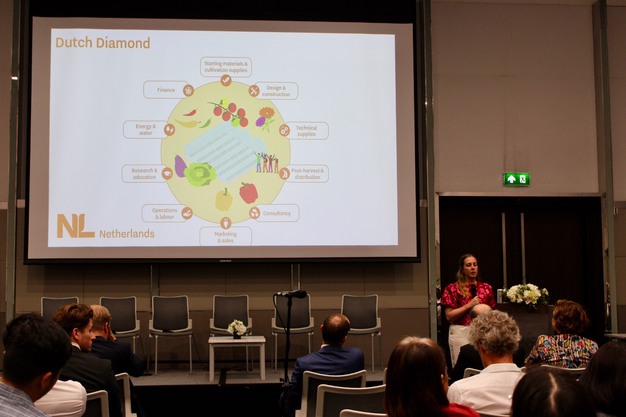
Mirjam Boekestijn, CEO of Dutch Greenhouse Delta, highlighted climate change, urbanization, and food insecurity as key drivers pushing the sector toward greenhouses and controlled environment cultivation. “Greenhouses, climate management systems, AI, drones, and substrate customizations are all crucial innovations,” she said. “But more importantly, knowledge of how to apply each innovation is crucial for success.” She urged participants to first define the business case, crop type, production location, market access, consumer demand, and profitability goals before investing in protected cultivation, noting the relevance of the “Dutch Diamond” for ASEAN—a four‑way partnership concept including government, knowledge institutions, businesses, and farmers working together to turn horticultural needs into practical, market‑ready solutions.
 © Alysha Fernandes | FloralDaily.com
Is technology a risk or asset for ASEAN?
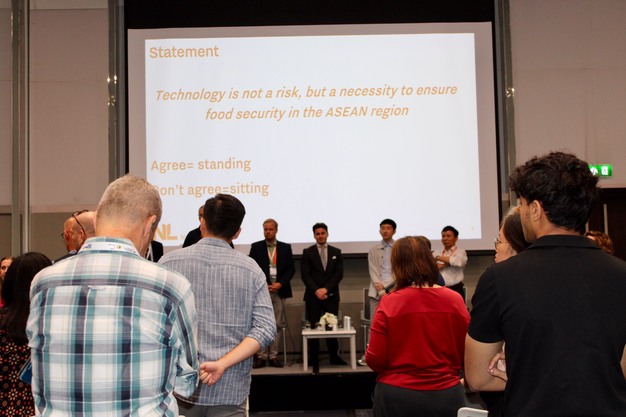
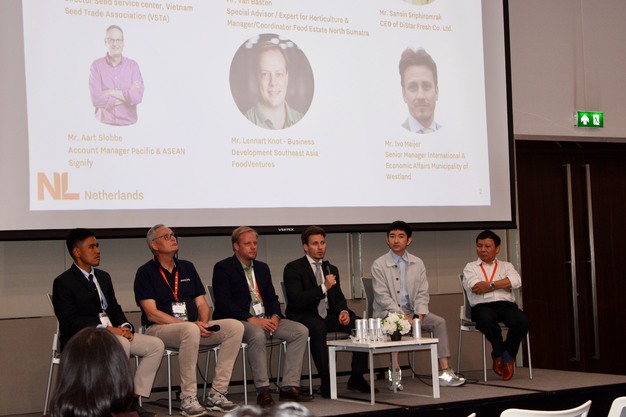
A panel discussion asked whether technology is a risk or an asset for ASEAN. Almost the entire audience stood, signaling they viewed it as an asset. Ivo Meijer of Municipality Westland cautioned that technology can become a risk if there is no awareness or proper adoption.
Mr. Van Basten of Food Estate North Sumatra put this in Indonesia’s context: with about 200 million hectares under cultivation, the sector is labour‑intensive, and maintaining biodiversity while balancing perennial and seasonal crops is a priority. Indonesia is improving market access for farmers and pursuing a national agenda of free school meals to support decent incomes, making low‑ or mid‑tech cultivation more feasible.
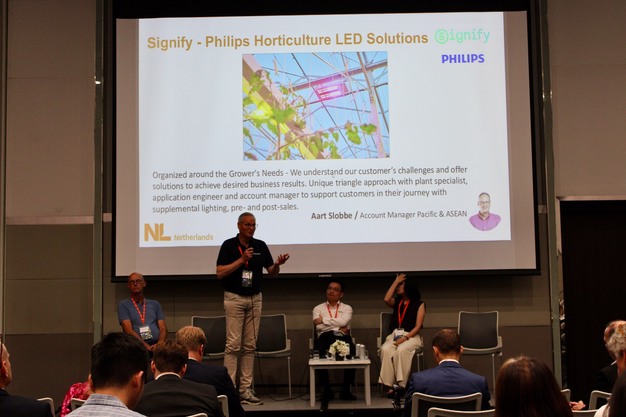
Aart Slobbe of Philips Horticulture LED Solutions argued that ASEAN needs Centres of Excellence to demonstrate Dutch technologies and tailor them for local capacity building, highlighting how lighting can improve yields in low‑sunlight regions.
 © Alysha Fernandes | FloralDaily.com
Sansin Sriphiromrak of DiStar Fresh, Thailand, pointed to policy and education as main growth barriers, noting that a majority of open‑field producers in Thailand use pesticides above residue limits. He stressed the need to educate consumers and bust myths against hydroponics, while Mr. Nguyen Thanh Minh of the Seed Trade Association Vietnam described how Vietnam is addressing food safety through technical guidance, production upgrades, and buy‑back schemes.
Lennart Knot of FoodVentures argued that while technology is often rejected for its high initial cost, it should be viewed through the lens of profitability. “Better insights into resources, operations, and productivity mean more savings. For instance, a farmer can be shown exactly how much fertilizer is wasted.”
Partner companies, including AP Holland, Brinkman, Dutch Greenhouse Delta, Dutch Lion, East‑West Seed, FoodVentures, Municipality Westland, Hoogendoorn, Hortinnovate, Metazet, Peterson Solutions, and Philips LED, discussed their live projects in ASEAN. These included demonstrations of how oxygen conversion reduces crop stress in hot climates, and how technology can be evaluated to optimize price per kilogram rather than push it up. For small‑scale farmers, clustering or forming cooperatives can improve purchasing power and make technology deployment more efficient.
 © Alysha Fernandes | FloralDaily.com
Building a realistic roadmap
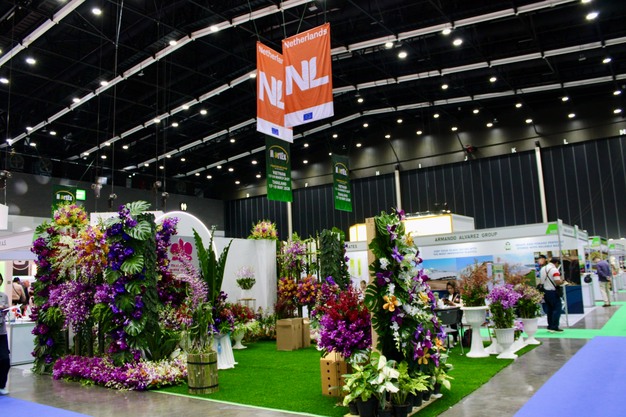
The seminar delegates concluded that high greenhouse costs will gradually become less of a barrier as the ASEAN region focuses on growing better. More work will be done in the future to sensitize end‑consumers through D2C models, as ASEAN governments increasingly prioritize safe and sustainable food production beyond low prices. “Greenhouses do not need to be high‑tech; even one camera or one sensor at a time can make a difference. With rising temperatures, cooling systems must be backed by better decision‑making that balances energy costs, and low‑ and mid‑tech solutions will be a vital starting point for countries like Thailand and Malaysia.” China’s success with cherry tomatoes under protected cultivation, by choosing the right location, crop, and operating set‑ups based on market conditions, was cited as a relevant case study.
 © Alysha Fernandes | FloralDaily.com
Wrapping up, Agricultural Counsellor Joost van Uum highlighted the region’s entrepreneurial spirit, noting that just as retailers and consumers drove greenhouse adoption in the Netherlands, the same must happen in ASEAN. In the future, Dutch technology providers will need to develop low‑cost solutions that improve feasibility and compete with China. “Seeing is believing,” van Uum said, as the Trade Mission continues to demonstrate, test, and optimize Dutch technologies in ASEAN.
Trending Products

Benchmark Bouquets – Flowerin...

Perfectione Roses Preserved Flowers...

Sen Flora Preserved Flowers Bouquet...

CKLMMCZX Preserved Flowers Bouquet ...

KaBloom The Romantic Classic Red Ro...

lovenfold Flowers for Delivery Prim...

Stargazer Barn – Holiday Chee...

Benchmark Bouquets – Signatur...

Bloom’s Diary Preserved Flowe...
